Temperature control and sterilising
Published over 6 years ago. See the latest and most current information on Temperature control and sterilising.
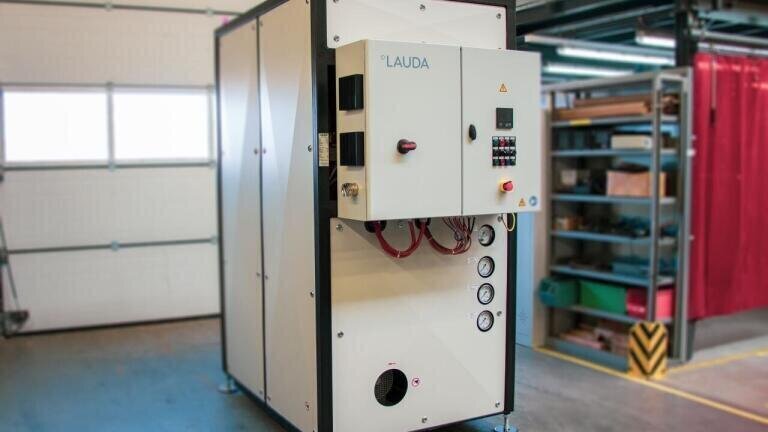
Lauda Heating and Cooling Systems specialises in the manufacture of individual solutions based on customer requirements. In this respect, the experts from Lauda hold sway over a temperature range from -150 to 550°C which is required for production facilities in the pharmaceutical industry or test stations in the automotive sector. The temperature control specialist has now designed and manufactured a heat transfer system for a long-standing customer, one of the biggest German chemical companies.
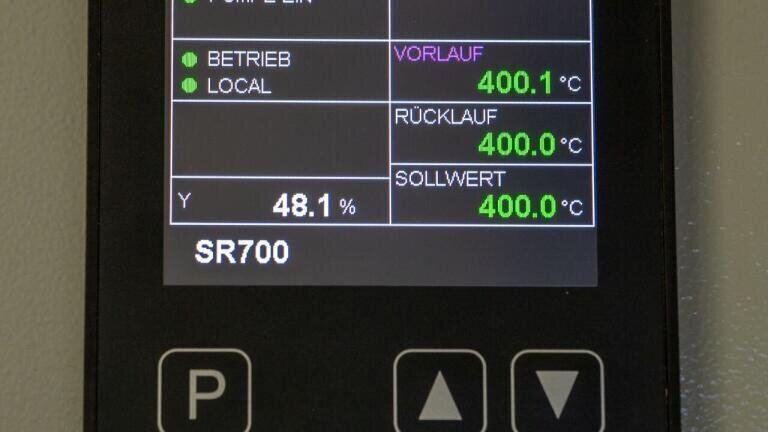
The customer ordered a system which must reach a working temperature of 400°C without any problems. The heater is used in the field of materials research, in so-called scale-up tests and for the preparation of reactions which make such a high temperature essential. "Heat transfer systems with a working temperature range up to 350°C are part of the day-to-day business of Lauda," said Project Manager Ralph Herbert. "The range up to 400°C is in the premier class.” However, this is increasingly in demand in the meantime, according to Ralph Herbert, because it allows more effective heat transfer, thereby enabling a higher throughput and optimisation of temperature-relevant production processes. Depending on the requisite outflow temperature and application area, these heat transfer systems use various types of thermal oils (silicone oil or eutectic mixtures). Generally speaking, they are electrically heated and generate a temperature-controlled liquid flow which heats the customer application in turn. A cooling option via heat exchanger can be integrated depending on requirement.
The particular feature of the jump from 350 to 400°C is that the engineers at Lauda have to deal with significantly higher working pressures. The stainless steel reactors used on the application side also have to withstand a higher load. "The maximum pressure in the heat transfer fluid circuit in normal heat transfer systems with thermal oils is 6 bar, but it increases up to 21 bar in the 400 degree systems, depending on the thermal oil used," explained Ralph Herbert. This requires expertise in pipeline construction and the individual equipment components which not every manufacturer can offer.
Lauda manufactures heat transfer systems in this high temperature range several times a year. The team of engineers at Lauda A is currently planning thermal oil systems with a maximum working temperature of up to 430°C. The system was completed on schedule for the customer from the chemical industry, inspected and approved in the test bed at Lauda and then commissioned on site together with the customer.
For further information please click here.
ILM 51.6 Sept 2026


 Product directory


.jpg)
.jpg)










.jpg)





.jpg)
