
Laboratory products
Published over 13 years ago. See the latest and most current information on Laboratory products.
The pharmaceutical industry is the most regulated of all industry sectors. Regulations like GMP, GLP and 21 CFR Part 11 as well as national and international pharmacopoeias have to be considered and met. The supply chain (see Figure 1) of a pharmaceutical company comprises several steps and processes. This supply chain can be divided into two areas: R&D and quality control. R&D requires high-end instruments that suit specific needs. The quality control area, including entrance, in-process and after-process control, requires robust, easy-to-use instruments. Critical factors in in-process control are the short feedback time to production control and immediate service availability. Since the whole supply chain except research is strictly regulated, instruments with quality documentation are an absolute must.
Figure 1. Supply chain of a pharmaceutical company
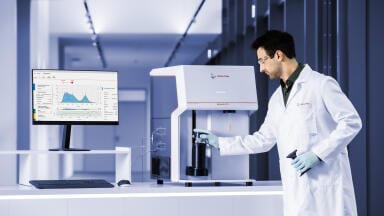
The Multiwave PRO platform system offers the full range of microwave-assisted techniques: acid digestion, solvent extraction and parallel synthesis. The instrument is robust and easy-to-use, featuring intuitive software. Depending on its rotor configuration, Multiwave PRO serves the most high-end requirements while also offering all proven methods for pharmaceutical samples (see Figure 2).
Figure 2. Potential placements of Multiwave PRO in the pharmaceutical supply chain
The compliance with pharma regulations is ensured by:
• Multiwave PRO’s software; which fully complies with 21 CFR Part 11 and features access control, electronic signature and audit trail.
• Multiwave PRO’s Qualification and Validation Documentation, which meets pharmaceutical regulations like GMP, 21 CFR Part 11, GAMP-5 and USP chapter <1058>, following the so-called 4Q-Model (DQ, IQ, OQ, PQ), and additionally contains a traceability list, risk analysis, a user standard operating procedure (SOP) as well as a protocol for 21 CFR Part 11.
The Multiwave PRO platform system is the right solution for:
- Synthesis, enabling convenient and efficient parallel method development and optimisation with software-documented on-the-fly adjustment of relevant reaction parameters (temperature, time, power). Several rotor types allow high-throughput preparation of valuable compounds from milligram to multigram quantities.
- Sample Preparation, providing comprehensive qualification documentation based on the latest regulations required in the industry and saving time and money in the qualification process. An integrated library with tested methods for different kinds of pharmaceutical samples simplifies the daily workflow. Additionally, methods for individual samples can be developed in the Anton Paar application laboratory.
Image 2. Multiwave PRO excels in the synthesis of product libraries of APIs
(active pharmaceutical ingredients).
High-throughput rotors employing silicon carbide technology allow the gram scale synthesis of up to 96 compounds in parallel as well as the screening of up to 192 parallel reactions in unique sealable microtitre plates. All high-throughput rotors serve conditions up to 200°C and 20 bar, which allows direct method transfer from monomode reactors and direct scale-up with 8- and 16-position rotors in Multiwave PRO itself.
Image 3. Beside standard acid digestion, unique applications like microwave-induced oxygen combustion (MIC) can be carried out in Multiwave PRO.
In 2011, a feasibility study [1] with aspirin samples launched in the USA verified the applicability of MIC as an appropriate sample preparation method for pharmaceutical samples according to the new chapters of the United States Pharmacopoeial Convention USP <232> and USP <233>.
[1] K. H. Nam, R. Isensee, G. Infantino, K. Putyera, X. Wang: Microwave-Induced Combustion for ICP-MS: A Generic Approach to Trace Elemental Analysis of Pharmaceutical Products, Spectroscopy, 2011: 26(4), 2-7.
ILM 51.6 Sept 2026



 Product directory













.jpg)


.jpg)

.jpg)
.jpg)
.jpg)
.jpg)


.jpg)
