Laboratory products
Plastic storage tubes are used in laboratories worldwide to store biological and chemical samples. As most plastics are supplied sterile, pyrogen- and DNAse/RNAse-free, it is generally accepted that this guarantees product integrity. Few researchers ever consider that despite these apparent guarantees, plasticware can still provide a potential source of error.
Evidence shows that bioactive compounds can diffuse into solutions that come into contact with the surface of the plastic [1, 2]. These compounds, typically referred to as ‘leachables’, or ‘extractables’, are used during the manufacturing process to improve product stability and durability. However, these compounds can have a significant impact on scientific experiments and pose a likely source of error in many assay systems. Examples of leachable interference include inhibition of enzyme activity and falsification of nucleic acid quantification.
The aim of this evaluation was to determine if ‘extractables’ could be detected in solvent solutions stored in Azenta external thread tubes and to compare the performance against competitor tubes.
Definitions
Materials
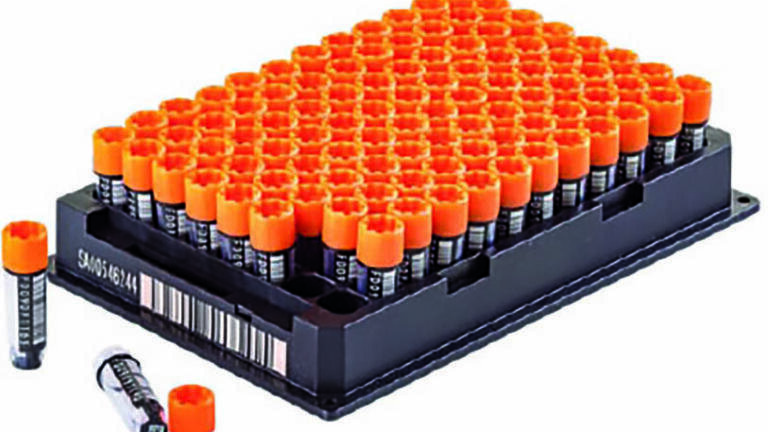
The following storage tubes were used in the evaluation:
Methods
1. Tubes were filled with 80% ethanol and the caps screwed on
2. NTubes were then placed into centrifuge tubes
3. Using a shaker table, the tubes were shaken at 20°C at 120rpm for 24 hours
4. 1μl was eluted from each tube
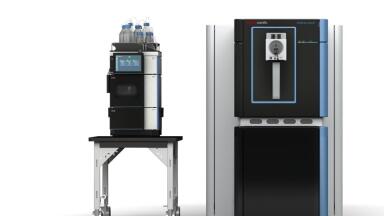
5. Elutions were subjected to Gas Chromatography / Mass Spectrometry analysis (Thermo Fisher Co. Ltd. GC:TRACF1300 / MS:ISQ).
All testing was performed by an independent 3rd party laboratory: Ig-M Co., Ltd. Headquarters Lab, Hyogo Prefectural Institute of Technology, Japan.
Discussion
The evaluation showed that ethanol was an effective solvent for detecting leachables in the sample storage tubes. From all the eluted material samples, at least 2 elutions of the same tube type have common properties. It is, therefore, possible to ensure the authenticity of the data. From MS analysis of the elution, the most likely substance was presented for each manufacturer. More certainty can be determined by using the appropriate reagent as a standard substance for comparison and comparing the measurement.
The evaluation demonstrated that there were obvious differences in performance of sample storage tubes between manufacturers. Since leachable compounds from plastic resin can have an adverse and erroneous effect on scientific investigations, it is vital that the performance characteristics of the storage tube are carefully considered.
Azenta external thread tubes were the only tubes that consistently produced no detectable leachables and, therefore, offer a superior solution for long-term storage of biological and chemical samples.
Alexis MacLeod is a product manager at Azenta Life Sciences. She may be contacted on [email protected]
1. A. Olivieri, O.S. Degenhardt, G.R.McDonald, D. Narang, I.M. Paulsen, J.L. Kozuska and A. Holt. Can. J.Physiol. wPharmacol. 2012; 90: 697-703.
2. McDonald GR, Hudson AL, Dunn SM, You H, Baker GB, Whittal RM, Martin JW, Jhe A, Edmondson DE, Holt A. Science 2008; 322(5903):917
ILM 51.6 Sept 2026




 Product directory













.jpg)



.jpg)