Laboratory products
London’s life sciences sector is exploding onto the real estate scene. The capital already leads Europe in biomedical research, with dozens of universities and hospitals (e.g. UCL, Imperial, Great Ormond St.) and over 2,400 life-science companies based here.
London’s life sciences sector is exploding onto the real estate scene. The capital already leads Europe in biomedical research, with dozens of universities and hospitals (e.g. UCL, Imperial, Great Ormond St.) and over 2,400 life-science companies based here.
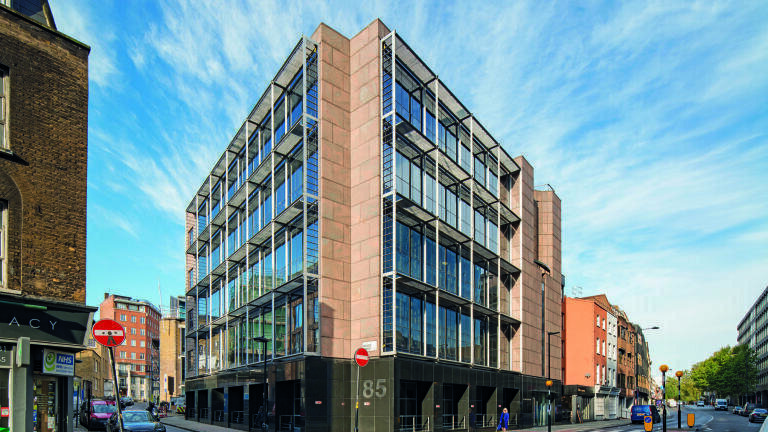
This dense innovation ecosystem is fuelling demand for lab space. To put it in perspective, London currently has around half a million square feet of dedicated lab and research facilities, with roughly another million under construction. And growth is dramatic: official projections forecast an extra 6.2 million ft2 of life-sciences labs and offices in London by 2030 (grow.london). Developers and fund managers are scrambling to meet demand – Clearbell Capital, for example, recently finished converting a 30,000 ft2 office at 85 Gray’s Inn Road into lab-ready space. Clearbell’s Toby Saul notes that “the life sciences sector is a major asset” for the UK, but that “there remains a widespread shortage of specialist space within London,” making high-quality labs essential for R&D and attracting talent. This wealth of opportunity, with ready access to investment markets and technology, links to London Universities and Hospitals means that London is an increasingly attractive place to establish a research laboratory. Young graduates and skilled laboratory researchers form part of the talent pool, with the London amenities and social life forming an attractive reason for living and working in the capital.
New high-spec labs are springing up across London. For example, Kadans Science Partner is developing over 300,000 sq ft of life-sciences facilities in King’s Cross (the Tileyard Quarter). The rendering shows one of Kadans’ new lab-enabled buildings (the “Versa” lab at 4 Brandon Road, King’s Cross), which will deliver about 51,500 ft2 of CL2 laboratory space right alongside their earlier development, 5–10 Brandon Road.
Other major schemes include Kadans’s Canary Wharf project (20 Water Street, 40,000 ft2 of labs) and a new UCL-Imperial “White City Innovation Centre” (planned ~200,000 ft2) backed by Bruntwood SciTech.
This rapid development comes in response to an increasing demand. In 2024 Savills reported roughly 485,000 ft2 of active lab requirements in London, many for small, start-up companies. Crunching the numbers, lab take-up in 2024 hit about 161,000 ft2 (17.5% of all ‘science-related’ deals). And the deal pipeline is strong – Savills noted some 115,000 ft2 of labs already under offer by late 2024. The surge in occupancy is tending to push rents higher. Recent lettings for fitted labs (usually with CL2 lab fit-out) have averaged around £120 per ft2, with advertised quotes even up to £160/ ft2 in premium locations (Savills.com). (By contrast, prime Central London offices go for under £65/ ft2) For example, base-stage biotech tenants at LBIC’s new Apex building in King’s Cross signed leases near £120 psf (savills.com). Industry reports note London lab rents generally running £70–125 psf (depending on spec and location), well above office norms. In short, fitted laboratories now command premiums of 65–75% over ordinary office rents in comparable areas. (savills.com)
Government backing complements these private efforts. Since Sir John Bell’s 2017 Life Sciences Industrial Strategy, the UK has consistently championed biotech R&D. By 2030, there will be an additional 6.2m ft2 of lab and office space dedicated to Life Sciences in London. All signs point to London remaining an innovation hub. Its unmatched concentration of universities, hospitals and biotech firms continues to attract talent and investment. The acute need for lab space – even during funding lulls – means more conversions and speculative projects are under way.
Supported by policy and buoyant capital flows, London’s life-science property market seems set only to grow further. With hundreds of thousands of new lab-ready square feet coming online, London is writing the next chapter of its life-science boom – solidifying its status as a global science powerhouse.
ILM 51.6 Sept 2026



 Product directory














.jpg)



.jpg)

.jpg)



.jpg)
