Laboratory products
Published over 15 years ago. See the latest and most current information on Laboratory products.
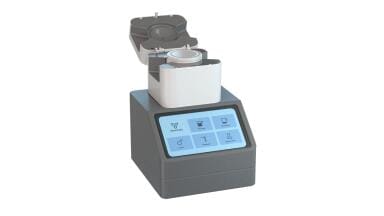
One of Europe’s leading independent testing laboratories sought an alternative to the standard solvent extraction/acid hydrolysis (Soxhlet) method for testing the amount of fat in a variety of foods. With numerous sites throughout the UK and Ireland, this contract laboratory provides quality control analytical services to the food industry. By converting from the wet chemistry method to a benchtop nuclear magnetic resonance (NMR) analyser for measuring fat content of foods, the lab reaped significant economic and environmental benefits.
Advantages of NMR over other secondary methods include:
• Calibration possible for samples with fat concentrations ranging from 0.5% to 100%;
• Primary calibration requires only a single fat sample;
• Recalibration needed infrequently;
• Sample measurement time is extremely short;
• Minimal sample preparation necessary;
• Eliminates the use of solvents;
• Suitable for bulk measurements;
• Insensitive to sample granularity and product additives; and
• Nondestructive technique, enabling repeat measurements.
Standard Wet Chemistry Methods Resulted in Bottlenecks.
The contract quality control laboratory specialises in testing foodstuff samples, and promotes itself as a provider of a fast turnaround service. A typical customer request includes five or six measurements, including fat (oil) content. The standard Soxhlet method typically used for the oil measurement may take as long as six hours. This long sampling duration was reducing throughput and affecting the lab’s ability to deliver its promised rapid analysis service. The process is also rather cumbersome, can be inaccurate, and requires highly skilled personnel. In addition, many of the hazardous chemicals used are becoming increasingly unacceptable according to international environmental standards.
ILM 51.6 Sept 2026


 Product directory











.jpg)


.jpg)