Chromatography
Published over 16 years ago. See the latest and most current information on Chromatography.
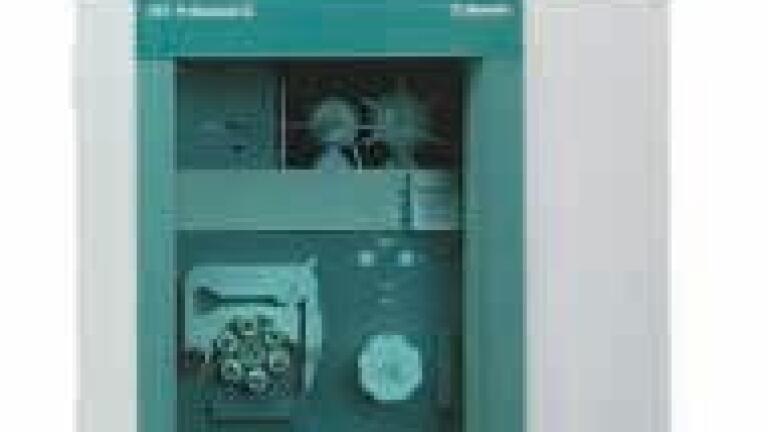
Drug Facilitated Crime (DFC) and Drug-Facilitated Sexual Assault (DFSA) in particular have become threats to partygoers in nightspots in many places. Prosecution depends on the successful detection of gammahydroxybutyrate (GHB) and its prodrug gamma-butyrolactone (GBL), the substances most commonly used to spike beverages to make the victim defenceless. Metrohm offers a straightforward and fast ionchromatographic method to determine both substances in a single run.
For the forensic determination of illegally added GHB and GBL in commonly consumed beverages, this method employs direct-injection ion chromatography combined with spectrophotometric detection. In the range of 10
to 200 mg/L, five-point calibration curves for GHB and GBL yield correlation coefficients of 0.9998 and 0.9997, respectively.
Spiking experiments in which GHB and GBL were added to alcoholic beverages and non-alcoholic fruit juices showed no matrix effects. The method allows to trace GHB-GBL interconversion, whether in-vivo or in-vitro
lactone cleavage or intramolecular GHB esterification, and thus complies with pertinent requirements of law enforcement agencies.
ILM 51.6 Sept 2026

 Product directory