Thermo Fisher Scientific, Inc has announced that researchers in Germany’s A&M Labs have validated a method that uses innovative Thermo Scientific high-Field Asymmetric waveform Ion Mobility Spectrometry (FAIMS) technology to remove interferences from a drug analysis.
Using this method, the researchers can adhere to the guidelines of the FDA to ensure human safety in drug development. Unforeseen analyte
interferences can cause validated LC-MS methods to fail, resulting in costly delays in obtaining data from clinical trials. Another impact of co-eluting interferences is data misinterpretation, which could cause dosing errors in human test subjects. The method was presented to the scientific community at the annual LC/MS workshop in Wuppertal, Germany on November 13, 2007.
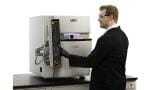
The FAIMS interface for the Thermo Scientific TSQ Quantumâ„¢ series of mass spectrometers works in combination with the H-ESI and APCI ion probes at atmospheric pressure to increase selectivity during analysis. FAIMS provides additional ion filtering, resulting in LC-MS/MS
chromatograms with reduced chemical background and endogenous interferences.
“We are pleased that Dr. Roemer and his team at A&M Labs could develop a validated LC-MS assay using FAIMS technology with such significance to human health,†said Jim Kapron, Strategic Marketing Specialist at
Thermo Fisher Scientific.


 Product directory