Chromatography
Published over 14 years ago. See the latest and most current information on Chromatography.
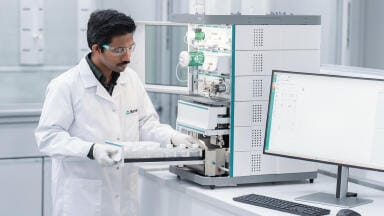
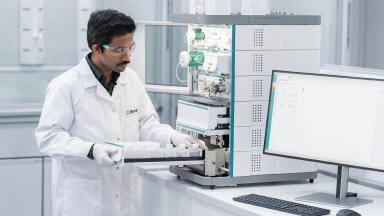
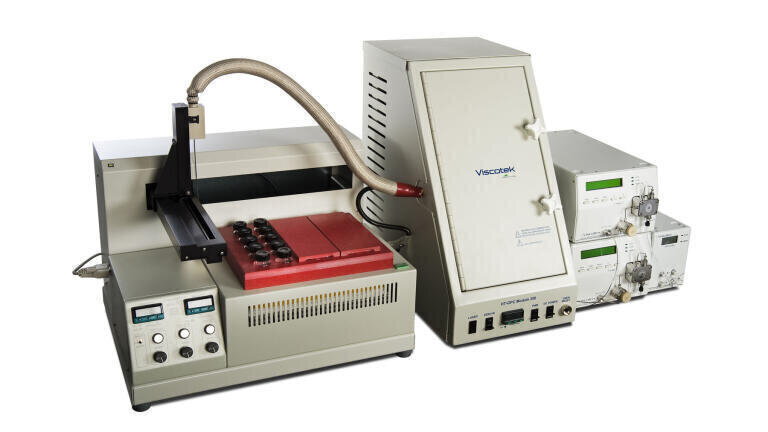
From red carpet dresses made from recycled bottles to biodegradable packaging made from plants, innovations in polymer technology are everywhere, powered by new analytical systems that generate the detailed information needed to tailor performance. One such, is the Viscotek HT-GPC (High Temperature Gel Permeation Chromatography) from Malvern Instruments, a powerful, fully automated, multi-detector system designed to prepare and analyse polymers, such as polyethylene and polypropylene, that demand temperatures as high as 160oC in order to dissolve, for successful analysis. Capable of generating molecular weight, molecular weight distribution and structural information in a single experiment, the HT-GPC produces an information-rich data stream for intelligent polymer engineering.
Molecular weight and distribution are defining characteristics of polymers, but structure such as the extent of chain branching, is also critical. In developing new products, researchers tune vital properties such as strength, processability, flexibility and permeability, by manipulating the extent of branching as well as the molecular weight and distribution. GPC is relied on to provide much of the necessary analytical information.
GPC analysis requires complete dissolution of the polymer and is therefore more difficult and hazardous with polymers such as polyethylene and polypropylene that require high temperatures and toxic solvents. The Viscotek HT-GPC addresses this issue, proving safe, accurate and productive analysis at temperatures up to 160oC. Fully automated, with excellent temperature control, it is designed to minimise the risk of exposure to the hazardous solvents necessary for these materials.
The full Viscotek HT-GPC triple detector configuration includes refractive index (RI), viscometry and low angle light scattering (LALS) detection. Together these detectors provide absolute molecular weight without extrapolation or correction, molecular size, intrinsic viscosity and branching information, from a single experiment. Advanced OmniSEC software drives analysis with full polymer branching calculations capability and an intuitive Branching View function that simplifies the study of long chain branching.
ILM 51.6 Sept 2026


 Product directory


.jpg)
.jpg)