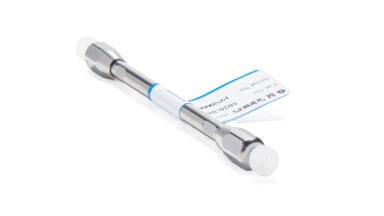
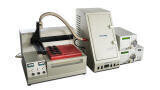
Conventional Calibration is the most widely practiced form of GPC because of its simplicity. It employs a concentration detector, typically a Refractive Index (RI) Detector or UV/VIS, and a calibrated GPC/SEC column to obtain the relative molecular weight, size and polydispersity of natural or synthetic polymers, copolymers and proteins.
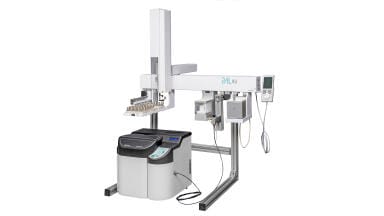
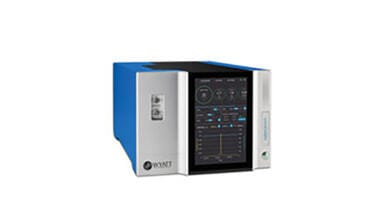
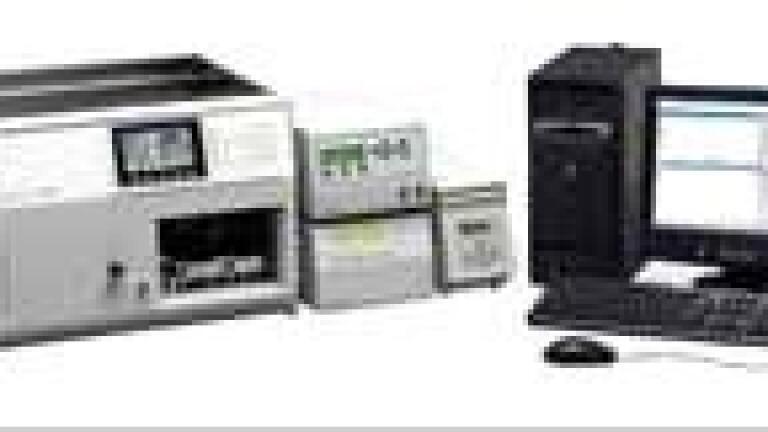
Viscotek announces their new RImax Conventional GPC/SEC System featuring an RI Detector used for measuring concentration, or a UV/VIS for measuring the concentration of polymeric samples or proteins having a UV chromaphore, or both an RI and UV for copolymer analysis. It also include a GPCmax Integrated Pump, Autosampler and Degasser Module specifically designed for GPC/SEC applications, and OmniSEC CFR 21 part 11 compliant software for complete system control, data acquisition, analysis and reporting.
Though simple and easy to use, the information content in conventional analysis is limited and the molecular weight obtained is always relative to the standards, which have been used to calibrate the column. To obtain an absolute molecular weight, size and intrinsic viscosity, as well as information on structure, conformation, aggregation and branching, advanced detectors such as Viscotek’s
light scattering and viscometer detectors can be added to a RImax Conventional System to create a Triple or Tetra Detector system.

 Product directory