Chromatography
Published over 16 years ago. See the latest and most current information on Chromatography.
Viscotek has published new application notes illustrating the extended capabilities of gel permeation chromatography/size exclusion chromatography (GPC/SEC) using the new photodiode array (PDA) detector for the
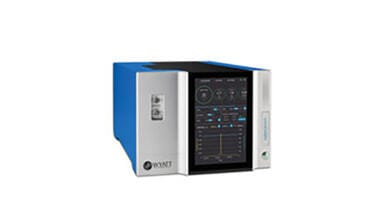
TDAMax™ system. Now available on the Viscotek website, these application notes illustrate how the new detection technology brings greater flexibility to multi-component characterization and analysis in fields from polymer science to biopharmaceuticals. The application notes describe ‘Conjugated polymer analysis by GPC-PDA’ and ‘Polymer blend analysis by GPC-PDA’ respectively.
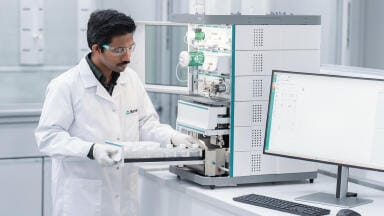
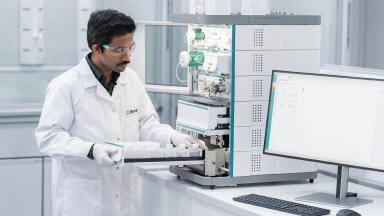
The Viscotek TDAmax is a comprehensive GPC/SEC system with an integrated triple or tetra detector array. By capturing absorption spectra across the UV-vis wavelength range, the new PDA detector provides a fingerprint
of each ‘time slice’ of the sample as it elutes from the column. Measurement times are just 30 to 40 minutes, making the system highly productive.
UV detection is used routinely to identify protein and polymer species as they elute, and can differentiate between components when other detection methods cannot. However, a conventional system measures at a single
wavelength. In contrast, the new PDA detector captures data across the range 190 to 500nm, allowing users to select wavelengths of interest after the analysis has been carried out.
The PDA also has particular application in the field of smart material research, since unique electrical, thermal or photochromic properties often correlate directly with UV absorption characteristics. The information it gives can be used in both product and process development.
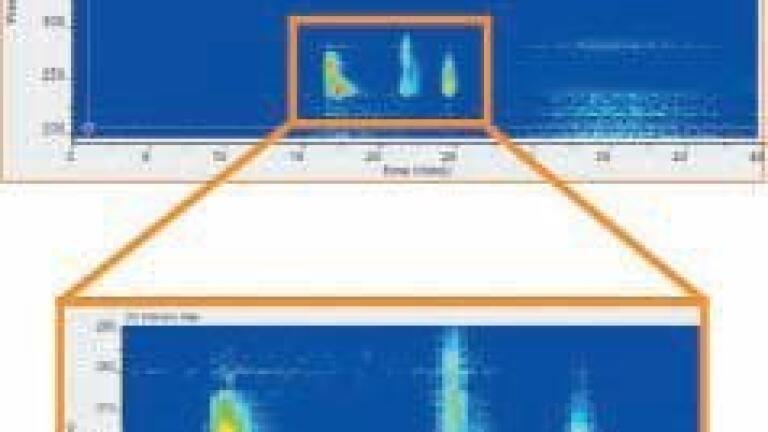
The UV cell of the PDA sits in the temperature controlled zone of the TDAMax™, operating at up to 80oC. Viscotek’s powerful OmniSEC™ software package allows data to be displayed as information-rich 3-D images that
simplify interpretation.
ILM 51.6 Sept 2026

 Product directory