
Gas chromatography
Diacetyl is a compound that yeast makes during fermentation that tastes like butter or butterscotch. In most lagers and clean ales, it is perceived as a fault because it dulls the hop and malt character. In a few styles - think some English ales or traditional Czech beers - a low level can be seen as desirable as the softness and be considered part of the profile.
Even extremely low parts per billion levels of Diacetyl can affect the beer. It drifts in as a soft butter note, then suddenly, a packaging day is on hold. Small breweries know the pattern: run a diacetyl rest, hope it clears, debate at the tasting bench, check again tomorrow. However, hope isn’t a viable plan of action.
A simple VDK test on a compact GC gives a straight answer at the ppb level. The method is simple. Degas a small aliquot to get CO₂ out of the way, purge the vial with nitrogen, then run a short headspace GC method with a selective detector so the trace diketones aren’t masked by other more abundant compounds such as ethanol.
The use of an ECD detector gives the sensitivity required to see these very low concentrations. In a recent application note, standard mixes at 100 ppb and 25 ppb separate cleanly, showing clear, quantifiable peaks for both VDKs. A British pale ale example lands near ~10 ppb diacetyl and ~4 ppb 2,3-pentanedione - numbers that align with a 'green light' for many lager and pale styles. That level of detail turns a vague worry into an immediate actionable data: extend the rest, warm the tank, check oxygen pickup, or sign off for packaging.
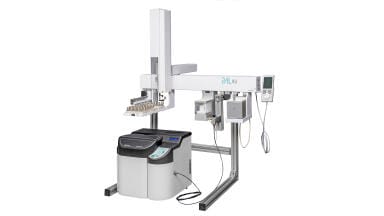
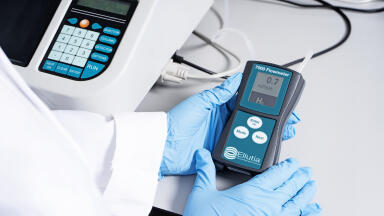
The Ellutia 200 Series GC with an ECD is a compact, cost-effective solution for VDK testing. The GC can be used with either an automated headspace autosampler for higher throughput or a manual headspace sampler to keep costs down.
Click here to download the application note or view the video on how to run the application here.
More information online
ILM 51.6 Sept 2026



 Product directory























.jpg)
