Laboratory products
Published over 11 years ago. See the latest and most current information on Laboratory products.
Improved Accuracy
Positive displacement microdispensers are recommended for applications which involve aspirating and dispensing microlitre volumes of difficult to manage samples. Due to their nature, it is often difficult to maintain accuracy and precision when aspirating or dispensing viscous, volatile, radioactive, unctuous, corrosive or dense liquids. Improvisation is not only frustrating and time consuming, but can be easily avoided by simply using the correct pipetting device combined with the correct pipetting technique.
Consistent Reproducibility
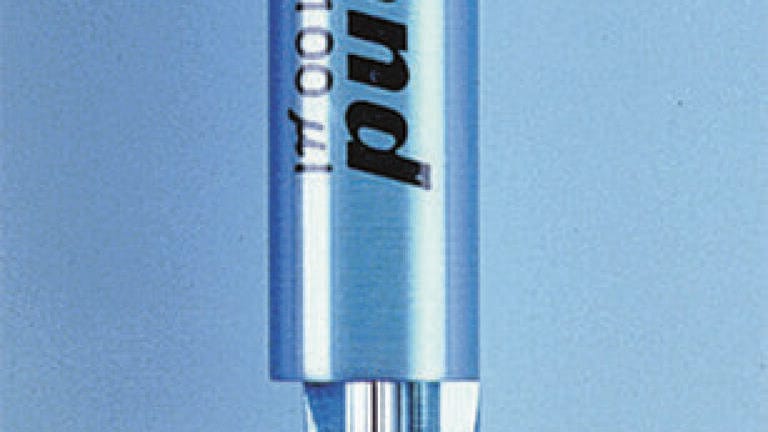
Positive displacement microdispensers function in the same way as a syringe. A disposable piston is in direct contact with the liquid being aspirated. This has several advantages. The absence of an elastic air cushion between the sample and the piston means that errors associated with air expansion and contraction are eliminated. Air elasticity varies with varying liquid density or viscosity and this will affect pipetting results. The removal of the air interface greatly improves reproducibility.
Contamination Free Pipetting
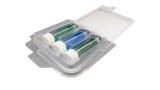
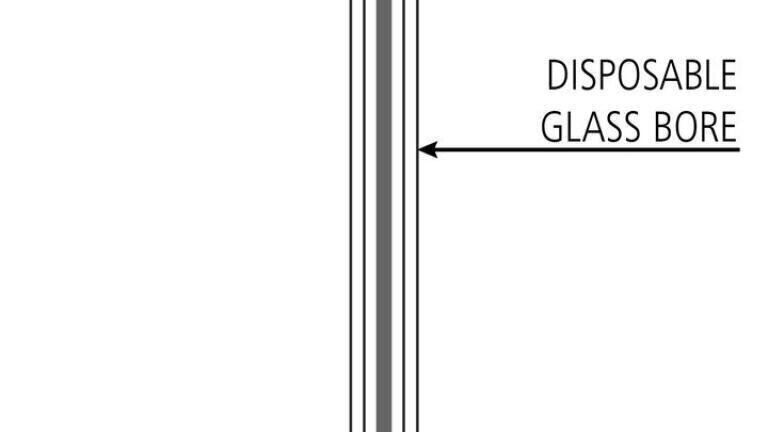
Contamination of the sample by the dispenser is prevented, and vice versa, as the liquid aspirated is confined to the glass bores that are used in conjunction with the microdispensers. Furthermore the disposable piston also serves as a barrier between the sample and the pipette, eliminating aerosol and other contaminants. This is of particular importance in applications involving radioactive or toxic solutions that need to be carefully contained.
Managing Small Volumes
The microdispensers are ideal when working with particularly small volumes of samples where high levels of accuracy and reproducibility are essential. Because the piston is in direct contact with the liquid, microlitre volumes of volatile liquids can be aspirated without the risk of evaporation. Pipetting errors due to cavitation are another common problem, especially when working with foamy liquids. This is eliminated when using microdispensers as no air enters the dispenser during aspiration steps.
ILM 51.6 Sept 2026




 Product directory