Laboratory products
Published over 9 years ago. See the latest and most current information on Laboratory products.
Asynt announces an updated version of its best practice guide developed to enable laboratory personnel to more safely use heating block systems.
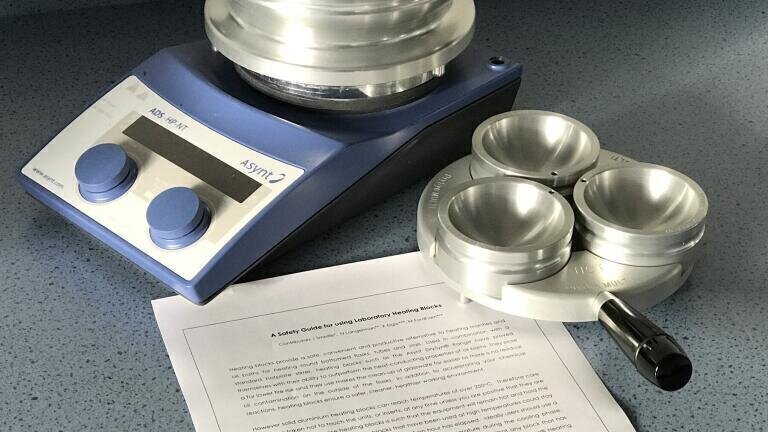
Written in conjunction with the Department of Chemistry, University of St Andrews (UK) and Advanced Chemical Safety Inc (USA) the illustrated guide leads you through best practices for glassware inspection, setting up your reaction, heating your reaction and the post-reaction cool down phase.
Popular in labs worldwide, when used properly, heating blocks provide a safe, convenient and productive tool for heating round bottomed flasks, tubes and vials. Used in combination with a standard hotplate stirrer, heating blocks are proven to provide superior heat-conducting properties compared to oil baths. They also pose a far lower fire risk and their use makes the clean-up of glassware far easier as there is no residual oil contamination on the outside of the reaction vessel. In addition to accelerating your chemical reactions, heating blocks ensure a safer, cleaner, healthier working environment.
For a copy of the best practice guide please visit http://www.asynt.com/services/best-practice/.
ILM 51.6 Sept 2026




 Product directory