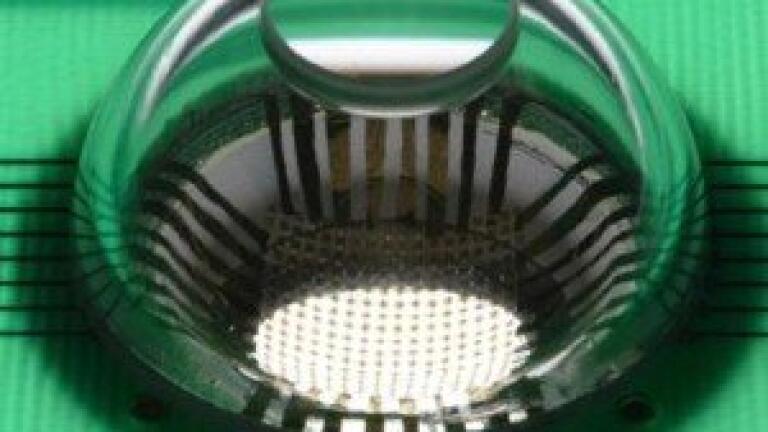
The device is designed to mimic the human eye in structure, but with the addition of the ability to zoom in up to 3.5 times normal size optically.
Optical zoom requires magnification of the image received by the camera and typically does not introduce pixelation, unlike digital zoom which involves 'blowing up' the image in post-production.
The structure of the camera could be most intriguing to laboratory equipment manufacturers keen to reflect nature's own designs in their products.
For instance, the shape of the lens is altered by injecting water into a chamber, increasing the curvature of the focusing membrane stretched over it.
While the camera is the size of a small coin, the same technology could be used to enable larger zoom ratios, potentially with the caveat of the device as a whole increasing in size.



 Product directory