Laboratory products
Published over 9 years ago. See the latest and most current information on Laboratory products.
Genevac has published a technical paper that reviews a selection of organic synthesis / purification reactions widely used by chemists in the drug discovery process where hydrochloric acid (HCl) has to be removed post reaction. In addition the paper discusses solutions to the problems which routine evaporation of concentrated HCl can create.
When synthesising and purifying organic molecules, hydrochloric acid (HCl) can be a very useful reagent for instance for t-BOC deprotection of amines, preparing acid chlorides and re-salt formation. Its preferential use over other mineral acids (that can produce undesirable side effects) and trifluoroacetic acid (that may leave unwanted fluoroacetate groups behind) is well established in scientific literature. However the removal of excess acid from samples can be problematic especially when working with samples in parallel as most commercial centrifugal evaporators contain non-glass components that are degraded by concentrated HCl.
In applications where HCl is either used as a reagent or it is generated in the reaction, care must be taken when evaporating samples. For labs handling single samples containing HCl, they are often dried in a rotary evaporator in which the majority of the wetted components are made of glass and are therefore resistant to acid attack. The author describes how users of rotary evaporators should check that their fume extraction system can safely accommodate HCl vapours or else costly damage may result. Additionally, users should ensure that the vacuum pump outlet pipe is correctly fitted and does lead vapours away safely, otherwise the HCl vapours may be drawn into the vacuum pump motor increasing its likelihood of early failure.
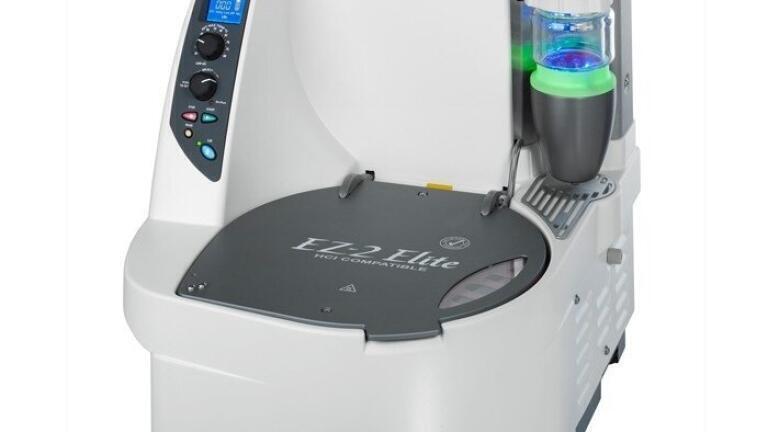
Traditionally there have been problems associated with using evaporators for removal of HCl from multiple samples in parallel where even low concentrations of the acid can cause corrosion leading to system failure. The author describes how these problems have been resolved by development by Genevac of a range of optimised HCl resistant centrifugal evaporators containing wetted components made from suitable acid resistant steels, coatings and elastomers enabling chemists to use HCl in reactions and not compromise on their preferred organic synthetic route pathway.
To download a copy of the ‘Strategies for Safe Evaporation of Solutions Containing Hydrochloric Acid’ paper please visit www.spscientific.com/Articles-And-Technical-Papers.
ILM 51.6 Sept 2026




 Product directory