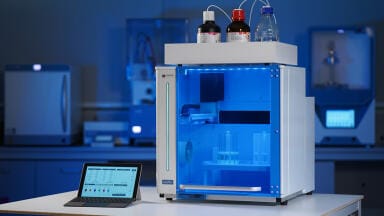
Thermo Fisher Scientific, Inc announces the launch of a new Total Sulphur (TS) analyser, the Thermo Scientific TS 4000. Further expanding on the TS 3000 routine analyser, the TS 4000 incorporates the patent pending Thermo Scientific True Total Sulphur (TTS) technology, removing nitrogen interference thus providing true total sulphur results. This novel TTS technology is capable of determining trace level sulphur in Cetane Improver, offering high productivity performance allowing for accurate and precise analysis of sulphur levels in automotive fuels. The unique versatility, robustness and sensitivity of the analyser make it ideally suited for a range of refinery and petroleum sample types with a high nitrogen concentration. The unique TTS technology has been developed by researchers at Thermo Fisher in response to new regulations including the ASTM D5453 methodology implemented by
the United States Environmental Protection Agency (EPA). These regulations dictate strict limitations on the sulphur content levels in automotive fuels. Ultralow sulphur diesels are already in use across much of Europe and Asia, and are expected to become a viable alternative to mainstream fuels by 2010.
Traditionally, combustion and Ultra Violet Fluorescence (UV-F) have been used for accurate analysis of sulphur in motor fuels. However, even an optimised detector may identify nitrogen as nitrogen oxide, which emits at the same wavelength as sulphur dioxide, resulting in inaccurate analysis. Low Cetane ultra low sulphur diesel fuel is usually spiked with Cetane Improver (2-EHN) to boost the Cetane number. When analysing sulphur in fuel oil using UV-F detection technique this 2-EHN component can cause inaccurate detection of higher sulphur content than truly exists, and consequently has a cost impact when it comes to refinery operation planning.




 Product directory