Laboratory products
Published over 3 years ago. See the latest and most current information on Laboratory products.
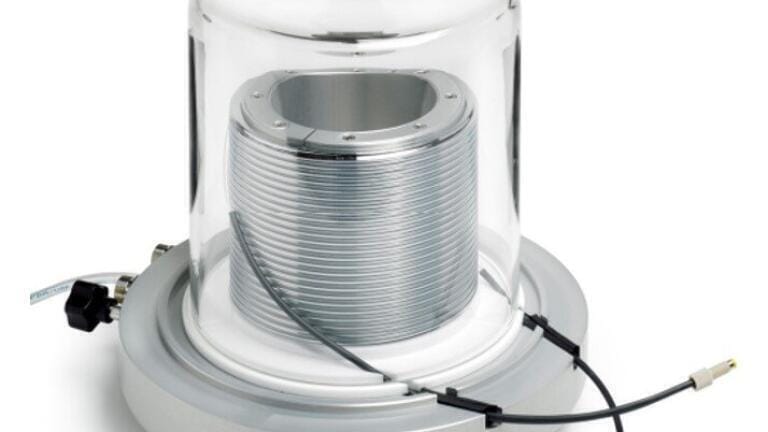
Used in conjunction with an external thermoregulation circulator, the Cold Coil II™ flow reactor module from Uniqsis can maintain stable temperatures between -78°C and +150°C for extended periods of time.
Proven to provide a flexible, entry-level solution for low temperature flow chemistry applications the Cold Coil II™ includes a glass cover to eliminate convective effects within fume cupboards. For routine operation at very low temperatures an optional vacuum jacketed glass cover is also available.
The Cold Coil II™ is compatible with all Uniqsis coil reactors, from 2.0ml up to 60 ml capacity. A proprietary clamping mechanism holds the coil reactor firmly in place and ensures optimal thermal contact whilst allowing coil reactors to be easily interchanged.
The Cold Coil II can be simply converted into a photoreactor by coupling with a Uniqsis PhotoSyn high power LED light unit. An optional Glass Static Mixer chip module allows the Cold Coil II to be used as a rapid mixing device before flowing directly into a coil reactor as an incubator module.
The Cold Coil II is also compatible with the Uniqsis HotColumn multiple column reactor adaptor for packed bed applications. To ensure accurate remote measurement of the Cold Coil II reactor temperature an optional internal temperature probe can be connected directly via RS232C.
More information online
ILM 51.6 Sept 2026




 Product directory