Laboratory products
Proteins are essential macromolecules composed of carbon, hydrogen, oxygen, nitrogen, and sulphur, playing a fundamental role in nutrition, metabolism, and food quality. Because nitrogen is the defining element of proteins, protein determination in food analysis is typically based on total nitrogen measurement.
Accurate protein quantification is critical for food labelling, nutritional research, regulatory compliance, and quality control. However, it is not without challenges: food matrices often contain both protein-bound nitrogen and non-protein nitrogen (NPN), making standardised and validated analytical methods essential.
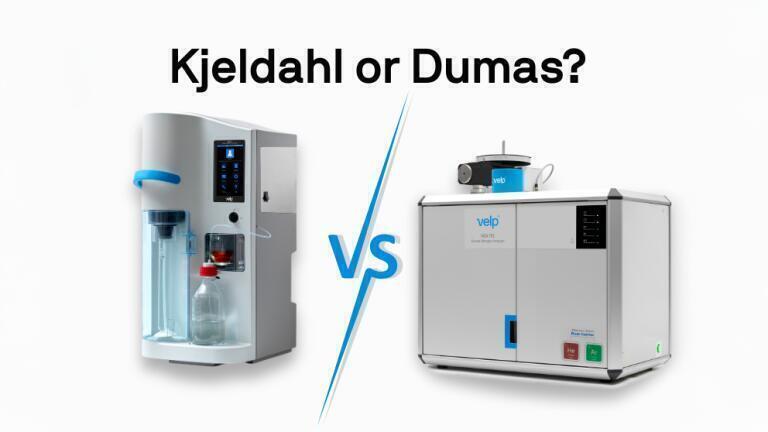
Today, laboratories rely mainly on two internationally recognised approaches: the Kjeldahl method and the Dumas combustion method, each suited to different analytical needs.
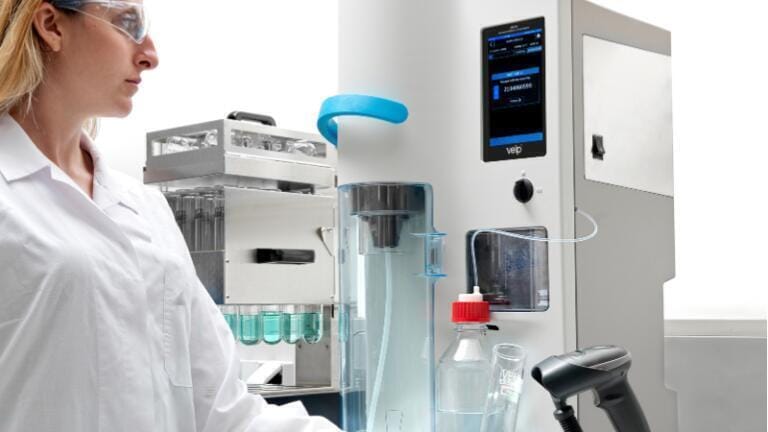
Introduced in 1883, the Kjeldahl method remains a global reference for protein determination. It measures Total Kjeldahl Nitrogen (TKN), which includes organic nitrogen and ammonium nitrogen, and is widely accepted by AOAC, ISO, FDA, and other regulatory bodies.
Why choose Kjeldahl?
Kjeldahl is particularly well suited for complex or heterogeneous samples, where robustness and method recognition are critical. While it requires longer analysis times and the use of chemical reagents, its reliability makes it indispensable for many food laboratories.
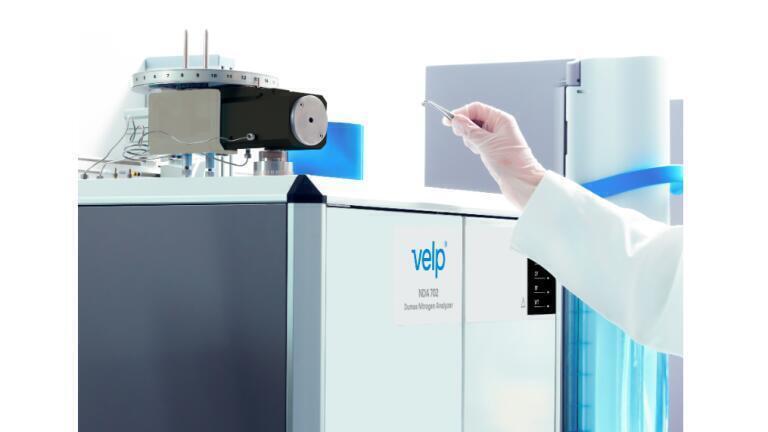
The Dumas method, based on high-temperature combustion, provides a fast, fully automated determination of total nitrogen without the use of hazardous chemicals.
Key advantages of Dumas analysis:
Although it involves a higher initial investment, the Dumas method reduces cost per analysis thanks to automation and low consumable usage. It is best suited for homogeneous food samples and routine industrial testing where speed and efficiency are priorities.
The choice between Kjeldahl and Dumas depends on your application, sample type, regulatory requirements, and laboratory throughput:
Velp supports food laboratories with complete, high-quality solutions for both methods:
Need help selecting the right solution?
Contact our experts to identify the most effective protein analysis method for your laboratory and ensure accurate, compliant results every time.
ILM 51.6 Sept 2026




 Product directory