Laboratory products
Published over 4 years ago. See the latest and most current information on Laboratory products.
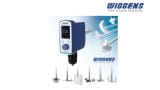
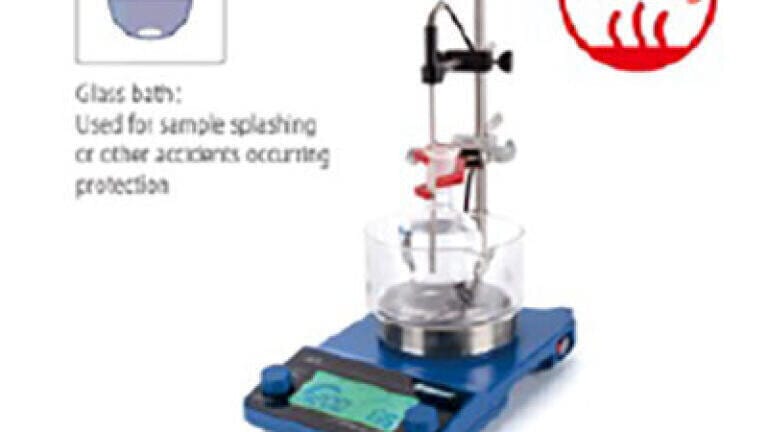
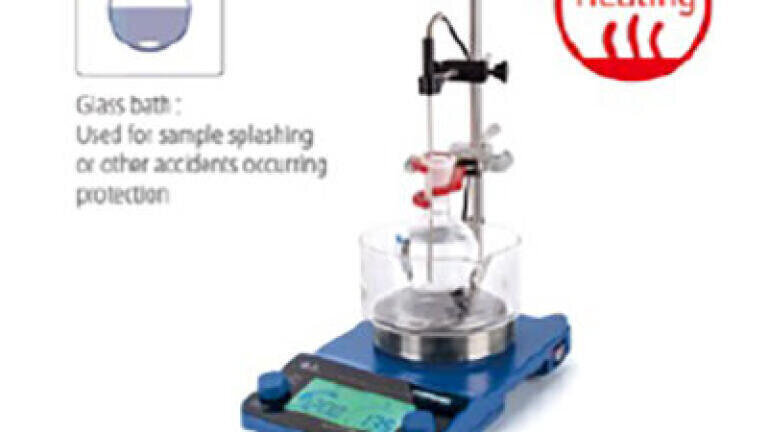
Infrared radiation heating refers to the spectrum between 0.7um-100um of light waves, emission and transmission accompanied by obvious, directional energy transmission. The energy transmission does not need any media, even in vacuum space. The infrared heating uses an electromagnetic wave with a wavelength of 2.5 to 15 um. This speed is much higher than the rate of conduction and convection. Thanks to this radiation heating technology, Wiggens hotplate and stirrer can be used for speedy heating up for various shaped vessels including round-bottom flasks, and the solution inside can be heated up to a maximum temperature of 450°C in a very short time.
The hotplate and stirrer, with its advanced infrared radiation technology, is characterised by direct, clean and safe heating compared to oil heating. The high infrared permeability ensures that the heating energy is transferred quickly and with very limited loss, i.e. it heats liquids fast and thus saves time and energy. PID control or advanced ICC technology enable good temperature stability. If the Pt-100 sensor is connected, temperature-controlled work with stability of ± 2°C can be reached in most applications.
More information online
ILM 51.6 Sept 2026




 Product directory