Research news
Researchers at the University of Exeter Medical School have uncovered a protective role for the microRNA miR-483-5p in the brain's response to stress, offering new insights into the molecular mechanisms behind anxiety-related behaviour.
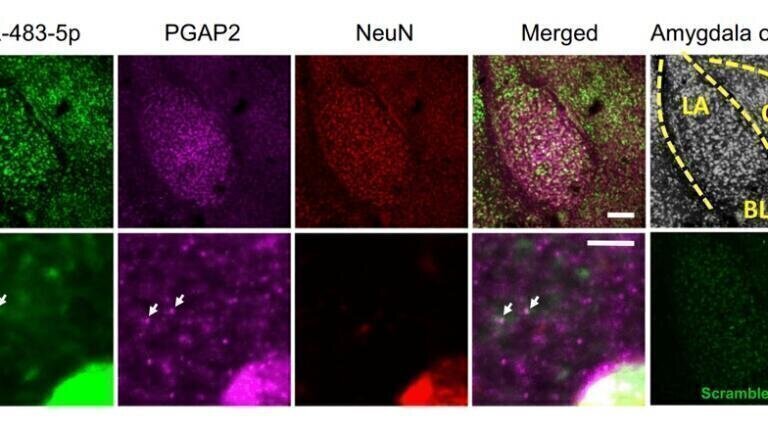
MicroRNAs (miRNAs) are short RNA sequences that regulate gene expression and have been implicated in a range of neuropsychiatric disorders. This study focused specifically on the function of miR-483-5p in the amygdala - a brain region critical for processing emotions and known to mediate the effects of stress on behaviour. While miRNAs are known to influence brain function, their role in the amygdala during stress responses has remained largely unexplored.
To investigate, Professor Robert Pawlak and colleagues used custom lentiviral particles from AMSBIO to selectively increase miR-483-5p expression in the amygdala of mouse models. This overexpression led to striking structural changes in neurons, including increased dendritic branching and higher spine density - both indicators of improved synaptic connectivity. Importantly, these neural changes were accompanied by measurable reductions in anxiety-like behaviours, suggesting that miR-483-5p may act as a natural buffer against the adverse effects of stress.
By uncovering how miR-483-5p shapes brain structure and function under stress, the researchers highlight a promising molecular target for future therapies aimed at treating anxiety disorders.
Explore the full blog post, complete with a link to the original study.
More information online
ILM 51.6 Sept 2026



 Product directory




















,-photo-Karin-Allander.jpg)








.jpg)
