Research news
NASA’s Curiosity Martian rover finds organic-like, long-chain alkanes preserved in the planet’s mudstone
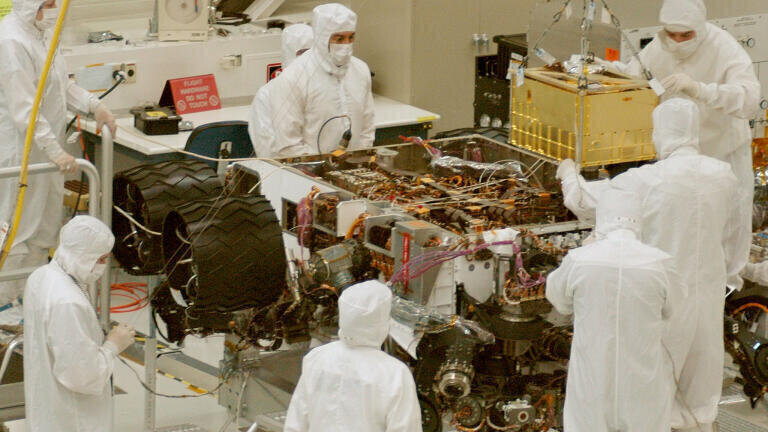
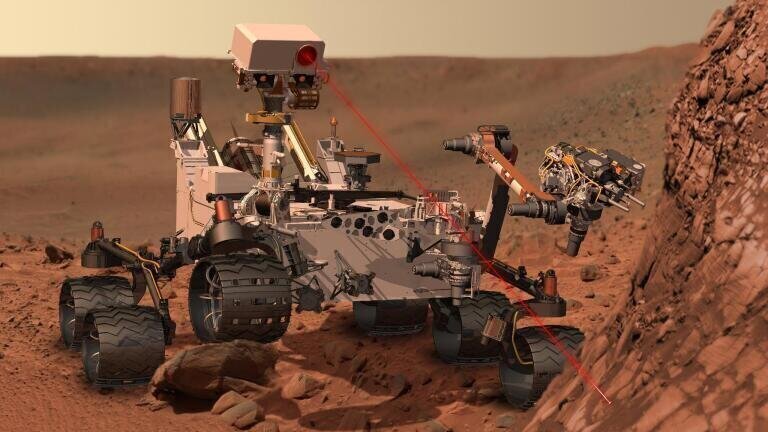
Twelve years after ‘Sample Analysis at Mars’ (SAM) – the laboratory on board Curiosity, NASA’s Martian rover – analysed its first solid sample in December 2012, it has now detected the longest carbon-chain molecules yet to be found on our solar system’s fourth planet.
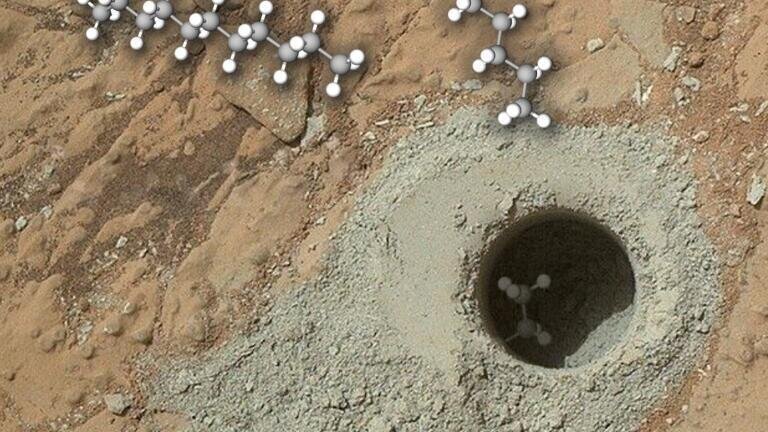
The carbon chain compounds that have been discovered contain up to 12 consecutive carbon atoms and exhibit features similar to triglycerides – medium-chain fatty acids – that on Earth can be created by biological activity.
The lack of significant geological activity in Mars’ recent past and its cold, arid climate may have helped preserve this trace of organic matter in the clay-rich sample, which was examined, for up to 3.7 billion years. Life first emerged on Earth a similar length of time ago.
The SAM project’s international scientific team is led by France’s National Centre for Scientific Research (CNRS), together with colleagues from the USA, Mexico and Spain, and its findings were published in a paper, entitled: ‘Long-chain alkanes preserved in a Martian mudstone’ in the journal, Proceedings of the National Academy of Sciences (of France) on March 24, 2025.
SAM has fundamentally changed our understanding of Mars. It has shown that the red planet may once have hosted a biochemical matrix like that which enabled the emergence of life on Earth. The required conditions were present – available water and energy – for the existence of simple organic compounds that are similar in nature to the key ingredients that scientists believe enabled the beginning of life on our planet.
NASA’s Curiosity rover landed on Mars on August 6, 2012, UTC-time. Touching down in the Gale Crater, which was chosen for its rich geological history and potential to give insight into past habitability of Mars.
Gale is a large crater – thought to be a former (i.e. dry) lake – and located at 5.4°S, 137.8°E in the northwestern part of the Aeolis quadrangle on Mars. It is 96 miles (154 kms) in diameter and estimated to be between 3.5 and 3.8 billion years old.
Exobiologist, Dr Caroline Freissinet from CNRS and the Sorbonne, Paris, alongside her colleagues have reported the detection of the long-chain, linear alkane compounds:
SAM analysed samples of Cumberland mudstone collected at Gale Crater on Mars. Sulphur and carbon isotope anomalies and a high abundance of nitrates have previously been identified in the Cumberland mudstone.
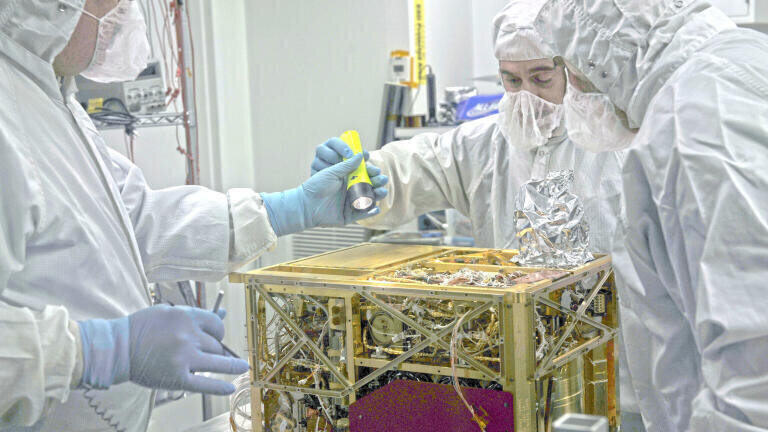
Curiosity’s robotic arm drilled into the Martian rock to retrieve the samples which are delivered to SAM’s ‘sample manipulation system’ (SMS), which separates and apportions them into one of 74 sample cups. The SMS then moves the cup to an oven, where the sample is heated to release the gases for analysis.
The authors used a modification in the analytical procedure, such that samples were first heated to around 475 °C to release molecular oxygen and then reheated to around 850 °C. Here, the authors identified long-chain alkanes released from the samples at the level of tens of picomoles.
Lab testing has suggested that the detected organic molecules may have originally been preserved as long- or medium-chain fatty acids – carboxylic acids – within the mudstone before being converted to alkanes during the sample heating process.
The Curiosity’s SAM suite deploys three analysis techniques in its onboard laboratory :
Since 2012, Curiosity has been exploring this region of the Red Planet, uncovering evidence of ancient water, detecting organic molecules and studying the planet’s climate and geology. SAM contains a comprehensive suite of laboratory instruments, within the Curiosity rover, which use techniques including gas chromatography, mass spectrometry and a tunable laser spectrometer to allow it to analyse its collected samples. The purpose and scientific goals of SAM include:
SAM has made some notable advances in the knowledge base of Martian chemistry and the planet’s composition and history:
On Mars, detection of long-chain alkanes is intriguing as it raises the question of whether they were formed biologically or geologically. Long-chain alkanes are strongly associated with the development of life on Earth, with simple organisms like bacteria and fungi able to synthesise fatty acids, including medium-chain fatty acids (MCFAs), as part of their lipid metabolism. Candida albicans, a common yeast, has been shown to metabolise MCFAs while plankton and some marine invertebrates, use MCFAs in cellular membrane structures or in energy storage.
However, they are not always evidence of organic life and while they can be produced by biological processes, they can also form through entirely non-living – abiotic – processes. Examples of how long-chain alkanes can be formed by abiotic processes, include:
It is remarkable to have discovered a 12-carbon alkane at all on Mars when you consider the harsh environment at or near the planet’s surface – at least in comparison to Earth where alkanes are abundant. Dodecane – the 12-carbon alkane – is most commonly a liquid on Earth at room temperature and sea level. It has a freezing point of around minus 9.6°C (14.7°F). However, on Mars, with its very thin atmosphere, dodecane would likely sublimate at a temperature well below its freezing point on Earth.
The average surface pressure on Mars is circa 610 Pascals – or 0.6% of the mean atmospheric pressure of Earth – which would mean that dodecane sublimates at an estimated temperature of between -50°C to -60°C. The exact temperature would depend on the specific local conditions, such as temperature fluctuations, topography, and atmospheric density. However, in general, dodecane would transition directly from solid to gas at these low temperatures on Mars, bypassing the liquid phase altogether.
While the SAM laboratory on the Curiosity rover has contributed to the discovery of organic molecules on Mars, the expanding body of evidence has not yet confirmed the existence of life. Instead, these findings are leading scientists to consider the possibility that Mars has had the necessary conditions for life in its past. Alternatively, it could potentially harbour life which exists in a form that we are not yet capable of detecting. The evidence therefore remains inconclusive regarding the existence of organic life on Mars.
The success of Curiosity has been a proof-of-concept for future interplanetary science missions to seek out the signs of complex, life-like chemistry, which is one of the goals of ESA’s upcoming ExoMars mission set to be launched in 2028, and the joint NASA-ESA Mars Sample Return mission scheduled for the 2030s.
With an eye to exploration further out in the Solar System, the same international teams will build an instrument similar to SAM for Dragonfly, the drone that is due to explore the surface of Titan, Saturn’s largest satellite, from 2034 onwards. Titan has a particularly thick atmosphere, lakes of liquid methane and ethane, and a complex chemistry that could offer further clues about the origins of the building blocks of life.
Dragonfly will be a ‘rotorcraft lander’, which means it is a flying drone with eight rotors arranged in a quadcopter configuration, but with two rotors at each corner. This design has been chosen for both stability and redundancy in Titan’s challenging environmental conditions.
Titan’s atmosphere is about four times denser than the Earth’s, but its gravity is only one-seventh of our planet’s. It is therefore considered better suited for aerial exploration allowing Dragonfly to fly between sites of exploration, covering far more ground than a rover like Curiosity.
Dragonfly will operate autonomously, its power source being a multi-mission radioisotope thermoelectric generator (MMRTG), which is the same type of nuclear battery that powered the Curiosity and Perseverance rovers. This will give Dragonfly the ability to operate through Titan’s long nights which last around eight Earth days.
Dragonfly is part of NASA’s New Frontiers Program – the same programme that launched New Horizons to Pluto and Juno to Jupiter – and is set to launch in 2028, arriving at Titan in the mid-2030s, and corresponding study author, Dr Caroline Freissinet is already working on the programme.
The article ‘Long-chain alkanes preserved in a Martian mudstone’ can be accessed at: https://www.pnas.org/cgi/doi/10.1073/pnas.2420580122
ILM 51.6 Sept 2026


 Product directory















,-photo-Karin-Allander.jpg)