
Research news
Liverpool School of Tropical Medicine (LSTM) and the Infection Innovation Consortium (iiCON) have reached a key milestone with the appointment of HighRes Biosolutions as the automation partner for a £20 million state-of-the-art robotic AI laboratory. This facility, one of the UK’s first Category Three containment labs with integrated robotic systems, is set to be completed by 2027.
Supported by £10 million funding from the Liverpool City Region Life Sciences Investment Zone, the new laboratory will advance research into some of the world’s most challenging infectious diseases. It will combine high-containment capabilities with AI-driven automation to enhance infection R&D and support innovation across academia and industry.
Professor Janet Hemingway, iiCON’s Founding Director, said: “This facility will transform infection research by enabling rapid development of new treatments and diagnostic tools. The appointment of HighRes Biosolutions as automation partner is a major step forward in bringing this vision to life.”
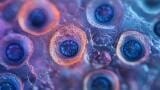
The lab will support iiCON’s pioneering platforms, including its human organoids program that models respiratory infections, and its Bio-Actives Library that accelerates discovery of novel antimicrobial agents. By automating complex workflows, the facility will enhance reproducibility and throughput in infection modelling and drug discovery.
HighRes Biosolutions was selected following a competitive process for its expertise in delivering scalable automation tailored to complex biological research.
Ira Hoffman, CEO of HighRes Biosolutions, said: “We are proud to support this visionary project. The lab will enable advances in infection research that have global health impact, particularly in low- and middle-income countries.”
The new facility will contribute to Liverpool City Region’s ambition to become a global leader in health innovation, with the Life Sciences Investment Zone expected to generate thousands of jobs and substantial new investment. Additional funding comes from UK Research and Innovation (UKRI) and the Wolfson Foundation.
Operations are scheduled to begin within two years, positioning the lab as a hub for cutting-edge infectious disease research and collaboration across the UK and internationally.
More information online
ILM 51.6 Sept 2026



 Product directory


















,-photo-Karin-Allander.jpg)





.jpg)
