Research news
Millions of women and girls should be tested for female genital schistosomiasis (FGS), according to researchers who warn that the overlooked parasitic disease may increase the risk of chronic illness, HIV infection and cervical cancer.
A paper [1] published in The Lancet Microbe calls for FGS to be urgently integrated into sexual and reproductive health services to improve diagnosis and treatment. The research, led by scientists from Liverpool School of Tropical Medicine (LSTM), the Malawi-Liverpool-Wellcome Programme (MLW) and the London School of Hygiene & Tropical Medicine (LSHTM), argues that millions of women are currently being missed because the disease remains largely absent from routine healthcare.
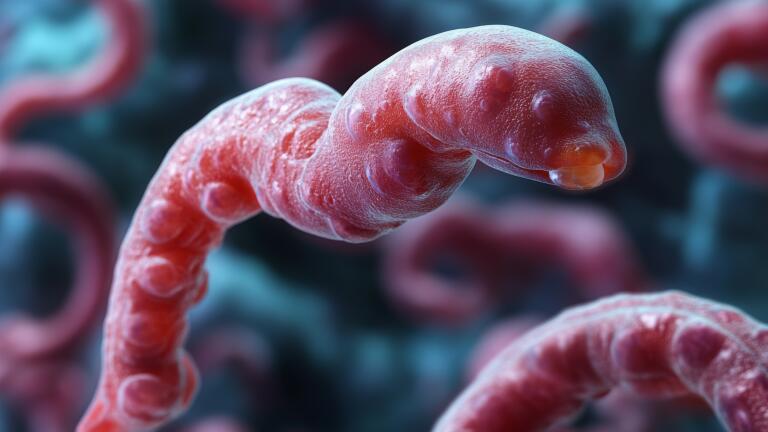
FGS is caused by the parasitic worm Schistosoma haematobium, which is transmitted through contact with infested freshwater. Once inside the body, parasite eggs become trapped in reproductive tissues, causing inflammation, lesions and scarring. The disease affects at least 40 million women worldwide, mainly in sub-Saharan Africa, yet it remains one of the most neglected reproductive health conditions.
The researchers found evidence that the chronic inflammation and tissue damage caused by FGS may leave women more vulnerable to infections including HIV and human papillomavirus (HPV), the virus responsible for most cases of cervical cancer.
They say integrating FGS screening into existing HIV, cervical cancer and sexual health programmes could significantly improve diagnosis and treatment. Suggested measures include combined HPV and FGS testing from a single genital sample, better training for healthcare workers, and the introduction of new molecular and AI-supported diagnostic tools.
Professor Amaya Bustinduy, Professor of Global Paediatric and Adolescent Infectious Diseases at LSHTM and senior author of the paper, said:
"Female genital schistosomiasis remains one of the most neglected gynaecological conditions affecting women and girls in Africa. Despite the scale of the problem, it is still routinely overlooked within both neglected tropical disease programmes and wider sexual and reproductive healthcare services."
The paper draws on findings from the Hybridisation in Urogenital Schistosomiasis (HUGS) study in Malawi, which identified high levels of co-infection between FGS and other genital infections.
Researchers also highlight the growing importance of zoonotic and hybrid schistosome species. Parasites normally associated with livestock have now been detected in genital samples from women with FGS, raising new questions about diagnosis, treatment effectiveness and long-term disease control.
Professor Russell Stothard, Professor of Medical Parasitology at LSTM and co-author of the paper, said:
"This paper highlights the urgent need to move beyond isolated disease-specific approaches and towards integrated care that recognises the overlap between FGS, HIV, HPV and other reproductive health conditions.
"The emergence of zoonotic and hybrid schistosome species also reinforces the importance of One Health approaches that consider human, animal and environmental health together."
The authors conclude that fragmented, disease-specific programmes are leaving women in endemic regions without the care they need and warn that continued neglect of FGS could undermine wider global health efforts.
More information online
ILM 51.6 Sept 2026



 Product directory


.jpg)
.jpg)












,-photo-Karin-Allander.jpg)



.jpg)
