Research news
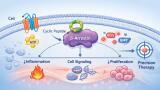
A team at the Medical University of Vienna has uncovered a promising new approach for tackling one of the most stubborn forms of lung cancer. Their study [1], published in npj Precision Oncology, shows that combining ERBB inhibitors with Aurora kinase inhibitors can effectively shut down KRAS-mutated lung adenocarcinomas - even tumours that have become resistant to current treatments.
KRAS mutations, which affect roughly one-third of lung adenocarcinomas and are more common in smokers, often outsmart existing therapies. Drugs like the KRAS-G12C inhibitor sotorasib can initially slow tumour growth, but many cancers quickly activate alternative pathways to survive.
“KRAS-mutated tumours often find ways around therapies, but they still depend on ERBB receptors and Aurora kinases to grow and survive,” explained Iris Uras Jodl, lead author and researcher at the Center for Physiology and Pharmacology, MedUni Vienna. “By targeting these molecules together, we can exploit a weakness that these cancers can’t escape.”
In lab and mouse models, the combination therapy delivered striking results. The pan-ERBB inhibitor afatinib, when paired with an Aurora kinase inhibitor, triggered cancer cell death, halted cell division, and blocked the escape routes tumours normally use to resist therapy. Remarkably, the approach also eliminated cancer cell clones that had already become resistant to afatinib or sotorasib, offering a potential lifeline for patients with few options.
“Since afatinib is already approved and Aurora kinase inhibitors are in clinical trials, translating this combination into patient care could happen relatively quickly,” added Uras Jodl, highlighting the path from discovery to potential treatment.
This study not only suggests a new therapeutic route for KRAS-driven lung cancer but also demonstrates the power of combining drugs to outmanoeuvre cancer’s adaptive strategies.
More information online
ILM 51.6 Sept 2026





 Product directory


.jpg)
















,-photo-Karin-Allander.jpg)