Research news
Researchers have visualised microplastics inside human tissue without destroying it for the first time – a breakthrough that could help uncover how plastic pollution affects human health.
A team from MedUni Vienna, working with colleagues at the Research Centre for Non-Destructive Testing (RECENDT) in Linz, has adapted a technique known as optical photothermal infrared spectroscopy (OPTIR) to detect and map microplastic particles directly within intact samples of human tissue. The findings, published in Analytical Chemistry [1] and Scientific Reports [2], mark a major step forward in microplastics research.
Until now, studying microplastics in the body has been limited by destructive analytical methods, which made it impossible to pinpoint exactly where the particles were located. OPTIR changes that by using infrared light to identify the chemical ‘fingerprint’ of plastics such as polyethylene (PE), polystyrene (PS) and polyethylene terephthalate (PET), while preserving tissue structure.
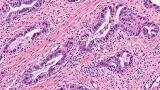
Even more importantly, the team successfully applied the method to formalin-fixed, paraffin-embedded (FFPE) tissue – the same type routinely stored in pathology labs worldwide. This allows researchers to link plastic contamination directly to microscopic and genetic changes in human tissue.
Using this approach, scientists identified several types of microplastics in human colon samples, often concentrated in areas showing inflammation. Further tests in mice and 3D cell cultures revealed that the technique can detect particles as small as 250 nanometres (0.00025 mm).
“By combining infrared fingerprinting with non-destructive imaging, we can now see exactly where microplastics end up in the body and how they relate to disease processes,” said Lukas Kenner of MedUni Vienna’s Clinical Department of Pathology, who led the research. “It’s a crucial step towards understanding the health consequences of microplastic exposure.”
Because OPTIR retains both the spatial and chemical information of samples, it provides a bridge between environmental science, toxicology, and pathology — opening the door to comprehensive, real-world assessments of plastic exposure.
As microplastics continue to infiltrate food, water, and air, the ability to trace their journey through human tissue could be key to understanding the health impact of microplastic exposure.
More information online
ILM 51.6 Sept 2026





 Product directory


.jpg)

















,-photo-Karin-Allander.jpg)