
Research news
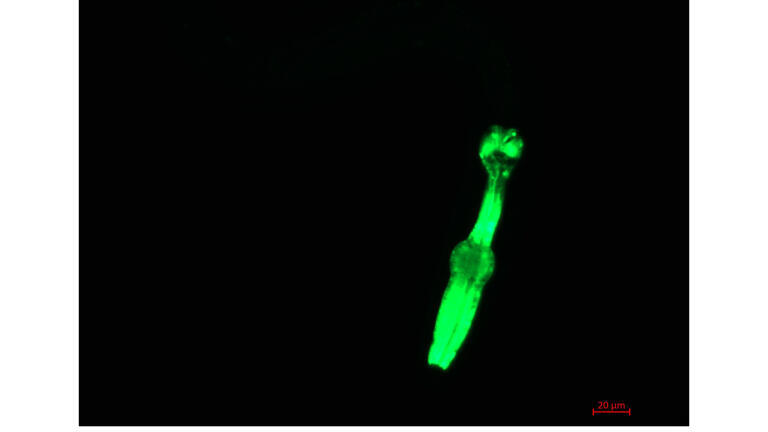
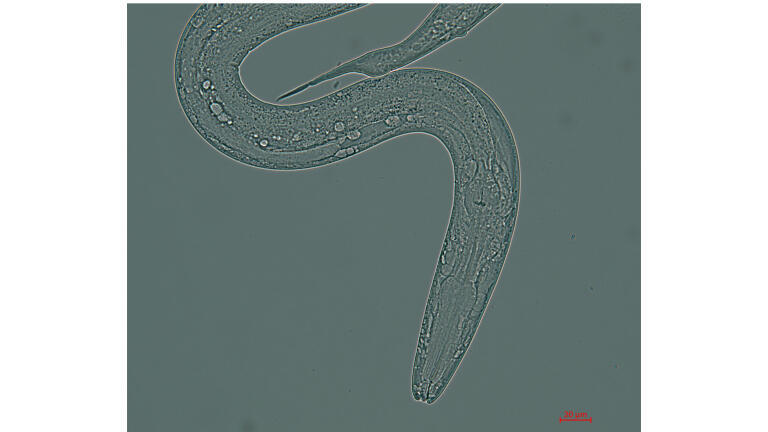
British scientists are sending microscopic worms to the International Space Station in a pioneering experiment to understand how living organisms respond to long-duration spaceflight and how astronauts could be better protected on future Moon missions.
Led by the University of Exeter, the project has been engineered and built by the University of Leicester at Space Park Leicester, with funding from the UK Space Agency. The miniature space laboratory will study how biological systems respond to extreme space conditions, including microgravity and radiation.
The experiment builds on NASA’s Artemis programme, which will return astronauts to the Moon for the first time in more than 50 years and eventually establish a sustained presence on the lunar surface. Researchers say the work could provide vital insights into maintaining astronaut health during extended deep space missions.
Scheduled for launch at 1.50pm BST on 8 April aboard a cargo mission from NASA’s Kennedy Space Center in Florida, the experiment will be mounted externally on the ISS using a robotic arm. It will be controlled remotely from Earth and will test dozens of microscopic nematode worms (C. elegans), each around 1mm in length and widely used in biological research.
The study addresses a major challenge in human spaceflight: the effects of long-term exposure to microgravity and radiation, which can cause muscle and bone loss, vision changes and genetic damage.
The experiment uses a compact 'Petri Pod' laboratory measuring 10x10x30cm and weighing around 3kg. It contains 12 experimental chambers, four of which can be imaged using fluorescent and white light systems. Each chamber provides a self-contained life-support environment with food, water and controlled atmospheric conditions.
After initial operations inside the ISS, the unit will be deployed outside the station, exposing it to vacuum, radiation and microgravity for up to 15 weeks. Researchers will monitor the worms using imaging systems and sensor data, including temperature, pressure and radiation exposure.
Space Minister Liz Lloyd said: “It might sound surprising, but these tiny worms could play a big role in the future of human spaceflight. This work will help astronauts stay healthy and return home safely.”
Professor Mark Sims of the University of Leicester said: “FDSPP is Leicester’s first major microgravity life sciences project, and it has been challenging to design and build. We’re excited about its potential and future development.”
Dr Tim Etheridge of the University of Exeter said: “NASA’s Artemis programme marks a new era of human exploration, with astronauts set to live and work on the Moon for extended periods. By studying how these worms survive in space, we can better understand how to protect astronauts during long missions and bring us closer to humans living on the Moon.”
The project also demonstrates how complex biological experiments can be miniaturised and carried out more cost-effectively in space, potentially opening the door to a wider range of future research missions.
More information online
ILM 51.6 Sept 2026




 Product directory




















,-photo-Karin-Allander.jpg)





.jpg)