News
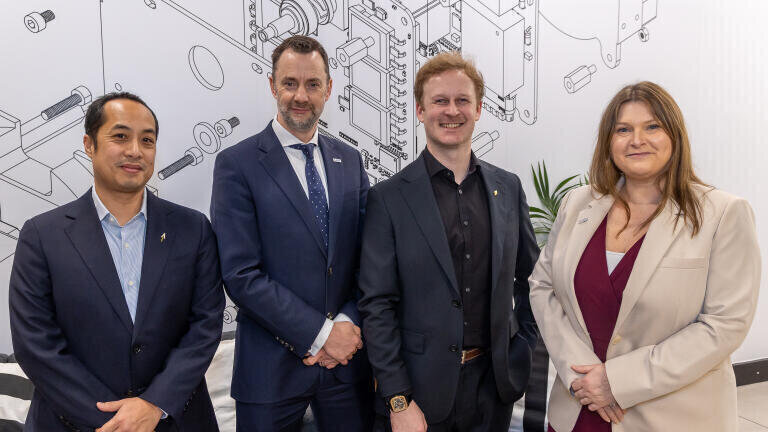
“Electric propulsion is shaping the future of how we operate in space, and by investing in infrastructure like this we are ensuring that UK innovators can lead the way,” said Space Minister Liz Lloyd, as the new Disruptive Experimental Electric Propulsion (DEEP) Lab opened at Harwell Science and Innovation Campus in Oxfordshire.
Built by Oxfordshire-based space technology company Magdrive, the £3.8 million facility gives UK businesses access to advanced testing capabilities for next-generation satellite engines - allowing satellites to manoeuvre more precisely, extend mission lifetimes, and travel further using far less fuel than traditional chemical rockets.
Backed by £1.8 million from the UK Space Agency through its Space Clusters Infrastructure Fund, alongside £2 million of company investment, the 10,000 ft2 DEEP Lab is not just for Magdrive: start-ups, established aerospace companies, and academic researchers across the UK space sector can access its world-class facilities.
“We’re delighted to unveil the DEEP Lab to the UK space community,” said Mark Stokes, CEO and co-founder of Magdrive. “This milestone accelerates the commercialisation of our next-generation thrusters and opens new opportunities for collaboration, discovery, and growth across the sector.”
At the heart of DEEP Lab is a 2-metre-diameter vacuum chamber capable of full thruster validation, supported by cleanroom assembly areas, a mechanical prototyping workshop, and advanced plasma diagnostics. Magdrive has brought in high-resolution imaging tools from the fusion sector, allowing engineers to monitor plasma behaviour from multiple angles — giving unprecedented insight into thruster performance.
“Our funding helps create 50 highly skilled jobs and establishes a world-class facility that addresses a genuine gap in UK space infrastructure,” said Dr Paul Bate, CEO of the UK Space Agency. “Supporting start-ups and smaller companies ensures innovation can flourish across the sector.”
DEEP Lab’s flexible setup allows organisations to rent individual rooms or capabilities under operational-cost pricing. The on-site workshop, complete with a 5-axis Hurco machine, 3D printers, and a full-time machinist, enables rapid prototyping and reduces development timescales.
Founded in 2020, Magdrive has attracted over £10 million in funding from UK and European space agencies. Situated within the Harwell Space Cluster alongside more than 100 other space organisations, DEEP Lab strengthens the UK’s capability in satellite servicing, constellation management, and deep-space missions.
“Magdrive shows what’s possible when public and private investment align,” said Jim Stretton, Managing Director of Harwell Campus. “With DEEP Lab, smaller UK space companies can accelerate technology development and help cement the UK’s position as a leader in electric propulsion.”
More information online
ILM 51.6 Sept 2026




 Product directory




























.jpg)