Research news
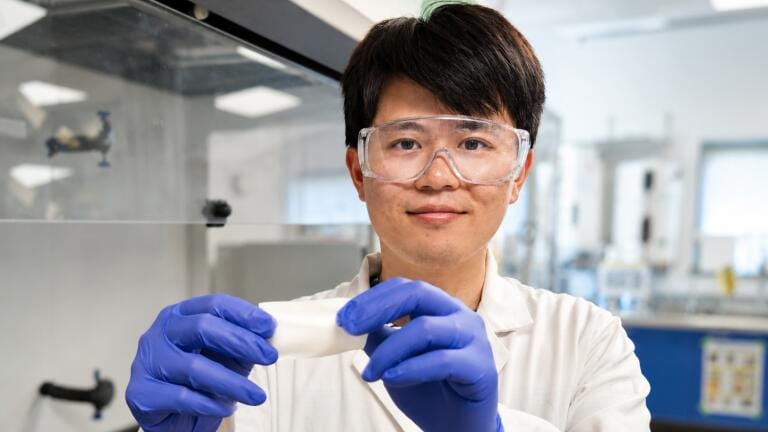
Researchers at the University of Bath have developed a sustainable wound dressing that rapidly delivers antibiotics during the critical early stages of infection, significantly reducing the formation of bacterial biofilms that can delay healing. The findings [1] have been published in Bioactive Materials.
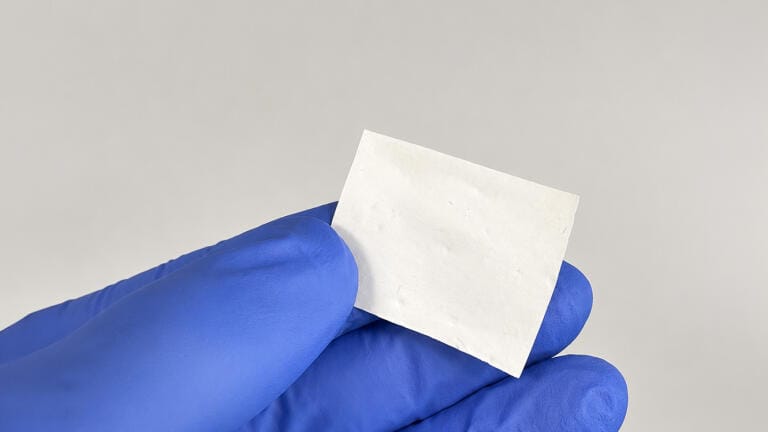
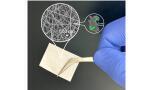
The novel dressing is made from renewable plant-derived polymers rather than conventional petroleum-based plastics. Designed with two distinct layers, it releases antibiotics directly into the wound while simultaneously providing a protective outer barrier that helps maintain an optimal healing environment.
Wound infections remain a major healthcare challenge, with bacteria capable of forming protective biofilms within hours of entering damaged tissue. Once established, these biofilms become far more difficult to eliminate and can prolong recovery. The new dressing is designed to intervene before this process occurs, rapidly releasing the antibiotic tetracycline and reaching effective concentrations within four hours.
Laboratory studies showed the dressing reduced biofilm formation by more than 90% against two common wound pathogens, Staphylococcus aureus and Pseudomonas aeruginosa. The material also demonstrated compatibility with human skin cells, with no evidence of toxicity.
"The two materials we used are very similar chemically; they differ by only two carbon atoms, but by spinning them into ultra-fine fibres, we can amplify these tiny molecular differences into dramatically different behaviours," said Dr Xiang Ding, lead author of the study. "This allowed us to create a smart, two-sided dressing that directs the antibiotic towards the wound while providing a protective barrier."
The multidisciplinary team, working with collaborators at the Universities of Bristol and Newcastle, believes the study demonstrates how plant-based polymers originally developed for sustainable plastics and packaging could be adapted for advanced wound care technologies. While further testing will be required before clinical use, the approach offers a promising route towards more sustainable, high-performance wound dressings.
More information online
1. Janus electrospun nanofiber membranes from bio-based furan polyamides for antibacterial wound care published in Bioactive Materials
ILM 51.6 Sept 2026



 Product directory


















,-photo-Karin-Allander.jpg)







.jpg)
