Research news
Researchers at the University of Bath have developed a renewable polymer membrane capable of capturing toxic PFAS compounds from water, offering a potential step forward in more sustainable water treatment.
The material was tested on perfluorooctanoic acid (PFOA), one of the most studied PFAS “forever chemicals”, which has been widely detected in global water supplies and linked to health risks including cancer, hormone disruption and immune effects.
In laboratory tests, the bio-based membrane removed more than 94% of PFOA. Unlike conventional filtration materials that require frequent replacement, the membrane can be thermally treated to release captured pollutants and then reprocessed into new material for reuse.
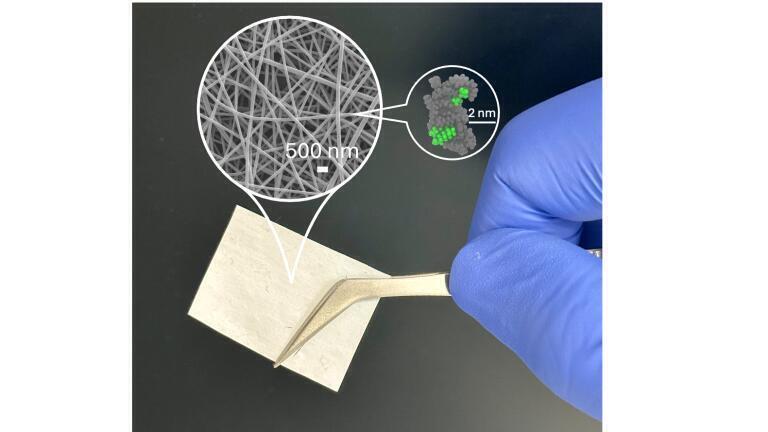
The technology is based on a network of nanofibres hundreds of times thinner than a human hair. When exposed to water, the fibres absorb moisture and contract, forming a tightening structure that traps contaminants within the polymer network.
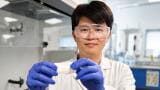
Dr Xiang Ding from the University of Bath’s Innovation Centre for Applied Sustainable Technologies (iCAST), who led the study, said the material behaves very differently from traditional polymers.
“Unlike conventional nylon materials, these bio-based nanofibres reorganise and contract in water,” he said. “That structural response enables rapid and efficient trapping of PFAS compounds within the network.”
PFAS removal remains challenging, with current approaches such as activated carbon filtration and ion-exchange resins often requiring replacement or complex regeneration. In comparison, the Bath membrane captured up to half of available PFOA within an hour and retained performance after washing.
The team also demonstrated that the membrane can be regenerated through heating and re-spinning, recovering around 93% of its original adsorption capacity. The use of renewable, furan-based building blocks is central to its sustainability profile.
Dr Ding added: “By moving away from fossil-derived materials, we show that high-performance pollutant removal can be aligned with more sustainable polymer design.”
The research team, which includes Dr Hannah Leese, Professor Matthew Davidson and Dr Carmelo Herdes, is now exploring scale-up and testing against other PFAS compounds.
The findings [1] point towards recyclable polymer membranes as a potential route to more circular and sustainable water treatment strategies.
More information online
ILM 51.6 Sept 2026



 Product directory



















,-photo-Karin-Allander.jpg)






.jpg)
