Mass spectrometry & spectroscopy
Published over 13 years ago. See the latest and most current information on Mass spectrometry & spectroscopy.
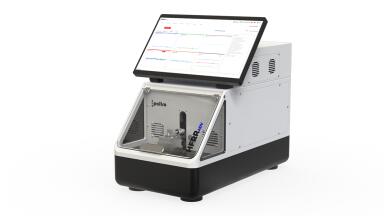
Microsaic Systems plc will showcase its new revolutionary chip-based technology for the first time at Pittcon 2013. Microsaic Systems is the only producer of mass spectrometry instrumentation using Micro-Electrical-Mechanical Systems (MEMS) technology. The significant and innovative advances in the new chip-based instrument, the Microsaic 4000 MiD, offers a redesigned unit with an even smaller footprint.
Microsaic Systems is the first and only company to have commercialised MS (mass spectrometry) technology on a chip based on MEMS technology originating at the highly regarded Optical and Semiconductor Devices Group at Imperial College London. The company’s breakthrough product, the 3500 MiD launched in January 2011, represented a step change in the ease of use and footprint of mass spectrometry. The instrument won an R&D 100 award from an independent judging panel and the editors of R&D magazine due to it being smaller, lighter, consuming less energy, easier to maintain and cheaper to run than conventional MS systems.
The Microsaic 4000 MiD is the culmination of over a decade of research, bringing together two high tech fields – chemical analysis and silicon micro-engineering – to make possible a transformative capability in detection. Its low operating cost and small footprint make the instrument deployable in a wide range of applications where mass spectrometry has not been able to reach - until now.
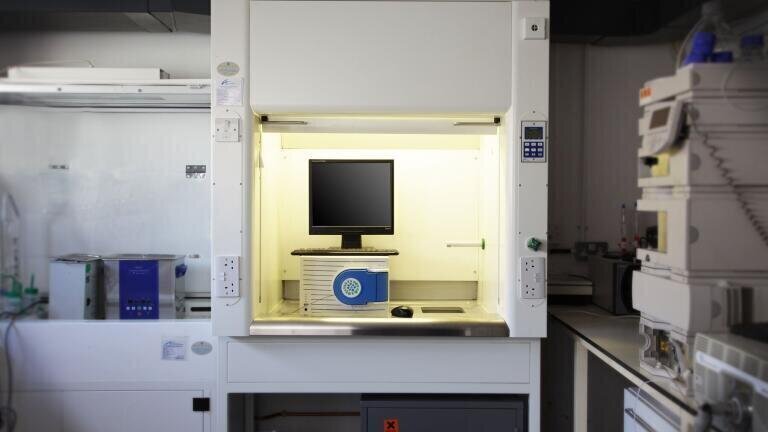
The next generation of the chip-based technology to make its US debut at Pittcon 2013 is now even smaller. As a result the Microsaic 4000 MiD fits even more comfortably into a standard lab fume hood, opening up further opportunities in the field of reaction monitoring. Users are able to increase the use of mass spectrometry in the lab, while benefiting from significant cost savings, owing to fewer necessary structural components such as gas generators and air conditioning. There are also sizeable savings with the use of ‘Plug and Play’ components which enable users to maintain the system themselves, resulting in less downtime and greater flexibility within the laboratory.
ILM 51.6 Sept 2026





 Product directory





















.jpg)