Mass spectrometry & spectroscopy
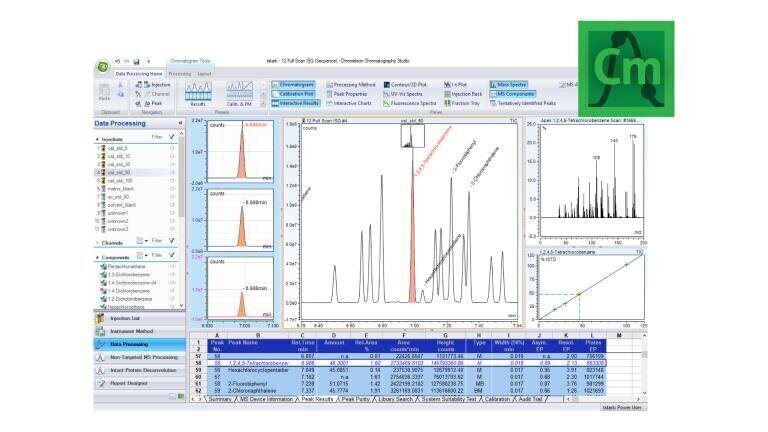
Thermo Fisher Scientific has unveiled Chromeleon 7.4, a new enterprise- and compliance-ready software platform for chromatography and mass spectrometry (MS) workflows. Supporting single quad, triple quad, and high-resolution accurate mass (HRAM) analyses, the software is designed to streamline data management in both regulated and non-regulated laboratory environments.
Chromeleon 7.4 helps scientists and lab managers focus on results rather than administrative tasks. Mass spectrometry generates large volumes of complex data, which can be difficult to process and analyse efficiently. By consolidating workflows into a single connected platform, the software automates targeted screening and quantitation, reducing manual intervention and minimising the risk of errors.
Unlike traditional workstation-based MS software, Chromeleon 7.4 manages all aspects of networked operation. It provides concurrency management, network failure protection, and consistent handling of analyses across instruments. Researchers can access data remotely, share results between labs, and maintain uniform software usage, eliminating the need to learn multiple disconnected systems.
The software is aimed at analytical scientists, super-users, and lab managers in biopharmaceutical, environmental, and food testing laboratories. It is particularly suited for teams that require compliance with regulatory standards or want to leverage enhanced connectivity to increase efficiency and consistency across their operations.
Chromeleon 7.4 also offers improved data visualisation, allowing users to examine single-scan fragments and simulated isotopic patterns for more accurate analyte identification and quantitation. Centralised data storage ensures integrity and traceability, while built-in audit trails, electronic signatures, and secure user management support GxP and 21 CFR Part 11 compliance.
By combining enterprise readiness, compliance support, and advanced data handling, Chromeleon 7.4 provides laboratories with a powerful platform to accelerate analysis, enhance reliability, and improve overall scientific outcomes.
More information online
ILM 51.6 Sept 2026





 Product directory



















.jpg)