Microscopy & microtechniques
Published over 12 years ago. See the latest and most current information on Microscopy & microtechniques.
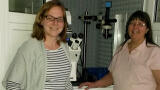
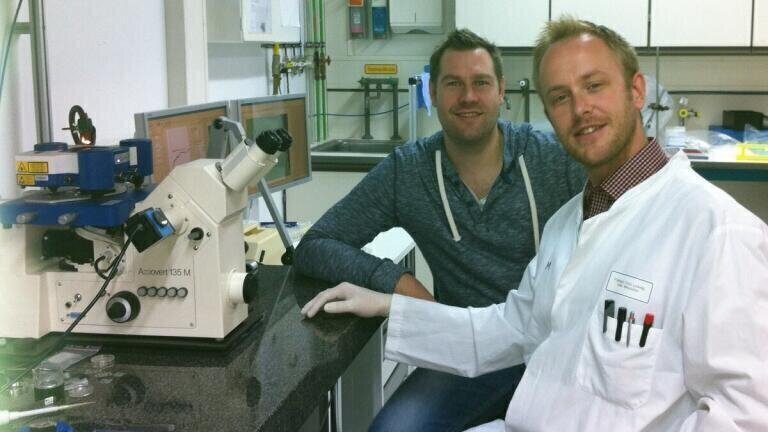
JPK Instruments (Germany) reports on the current cancer research project of Dr Florian T Ludwig at the Institute of Physiology II, University Hospital Münster, who uses a CellHesion 200 to measure the adhesive forces between tumour cells.
Dr Florian T Ludwig is a member of the team of Professor Albrecht Schwab and Dr Christian Stock. These researchers are interested in how ion transport across the plasma membrane affects tumour cell motility and, thus, metastasis. Occurring prior to migration and invasion, one early step of the so-called metastatic cascade is the detachment of single tumour cells or cell clusters from the primary neoplasm. This process is accompanied by a controlled loss of cell-cell adhesions caused by the release of bonds between adhesion molecules such as cadherins. Hence, the adhesion force between tumour cells might predict the tumour's malignancy. Tumour cells that exhibit low cell-cell adhesion forces would represent a highly metastatic phenotype since they detach more easily.
With the help of Mike Wälte from the group of the Head of the Institute, Professor Hans Oberleithner and Dr Hermann Schillers, Dr Ludwig measures cell-cell adhesion forces in tumour cells. This is based on the group's distinguished expertise of nearly two decades' experience in atomic force microscopy, AFM.
For the experiments, a single tumour cell is attached to the cantilever of a JPK CellHesion 200 system using a bionic cell adhesive. A second, adherent tumour cell is then approached with the cantilever until the two cells come into contact. After a defined contact time, the cantilever is retracted until the two cells are separated. The strength of the cell-cell bonds that formed while the cells were in contact is estimated by recording the force necessary to separate the cells. Here, the key feature of the CellHesion 200 system is its ability of the cantilever sensor lifting system to travel more than 110 µm giving a clear benefit for the researchers whose aim is to separate two tumour cells both gently, reproducibly and efficiently without damage. With the technique described here, cell-cell adhesion forces can be quantified.
ILM 51.6 Sept 2026



 Product directory