Microscopy & microtechniques
Published over 13 years ago. See the latest and most current information on Microscopy & microtechniques.
Linkam Scientific Instruments report on the use of their powerful TS1500 heating stage for geological research at the University of Lancaster, UK
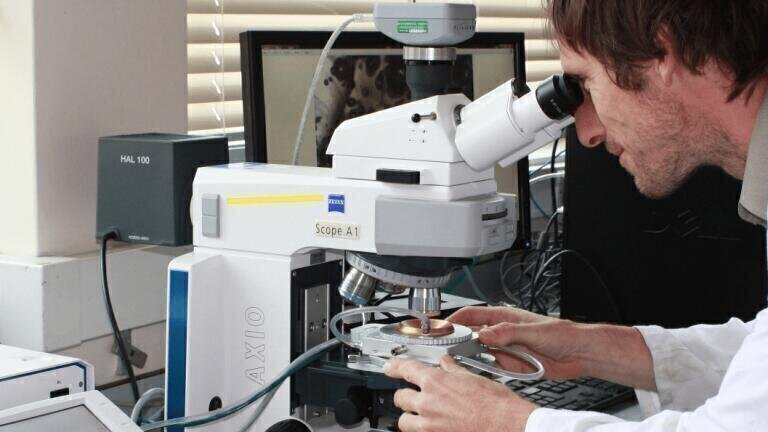
Dr Hugh Tuffen a former PhD student at Lancaster and now a Royal Society University Research Fellow at LEC, works with a team of volcanologists cooking lava samples in the laboratory using the Linkam TS1500 stage. Through a unique set of experiments they hope to better understand hazardous volcanic activity. Dr Tuffen said: "As far as I know, we are the only team using this powerful technology for this purpose. We take lava, melt it and watch the crystals grow in real time. The lava actually thinks it is back inside a lava flow and so does what it does in nature. The trick is that we can spy inside the lava and directly observe what is happening."
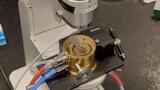
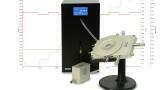
The TS1500 stage, with a temperature range from ambient to 1500°C, is ideally suited to the study of small geological samples. The sample is placed inside the ceramic sample cup ensuring that the sample is heated from below as well as the sides. The new T95 controller enables the stage to heat samples at an incredible 200°C/min. The TS1500 has the option to be ordered with vacuum connectors, for experiments requiring low pressure conditions.
Dr Tuffen likes the Linkam system: "It's a really great bit of kit. Students love it because it's so easy to use and they are, consequently, doing some exciting things with it. The hot stage is so versatile and is a key part of teaching for our Masters students. We also use it for outreach and recruitment too – we recently had more than 200 students and parents through the lab. They were able to watch rocks cook and crystals grow and this generated a lot of excitement."
Dr Tuffen commented: "The crystals thicken the lava up and that's the main reason why lava flows slow down and stop moving. We are planning to carry out experiments on the whole range of lava types found on Earth and hope that, ultimately, our research could help to save lives."
ILM 51.6 Sept 2026



 Product directory