News
Published over 15 years ago. See the latest and most current information on News.
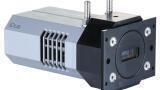
At a time of rising levels of MRSA and other hospital acquired infections, Laser Induced Breakdown Spectroscopy (LIBS) has been demonstrated to be a rapid and reliable technique for detection of life-threatening bacterial pathogen species that can be found in such medical environments. For the first time, scientists have used Chemometrics analysis of LIBS data in a blind test to successfully identify five pathogenic bacterial samples and differentiate between strains of a multiple-antibiotic-resistant species. Dr Rosalie Multari and her colleagues at Applied Research Associates believe that the ability to distinguish both species and strains using only raw spectra raises the prospect of rapid diagnostic instrumentation for use both within laboratories and in the field. Dr Multari’s team used the Andor iStar intensified CCD camera to analyse ten accumulated spectra from the laser-induced plasma plumes, with each spectrum accurately delayed by 1μs from the laser pulse and integrated on a 20μs temporal scale. The overall 1 second detection period allowed the accurate identification of five bacterial samples, including Escherichia coli, three methicillin-resistant Staphylococus aureus (MRSA) strains and an unrelated MRSA strain. Andor Technology Ltd.
ILM 51.6 Sept 2026




 Product directory



















.jpg)