News
Published over 10 years ago. See the latest and most current information on News.
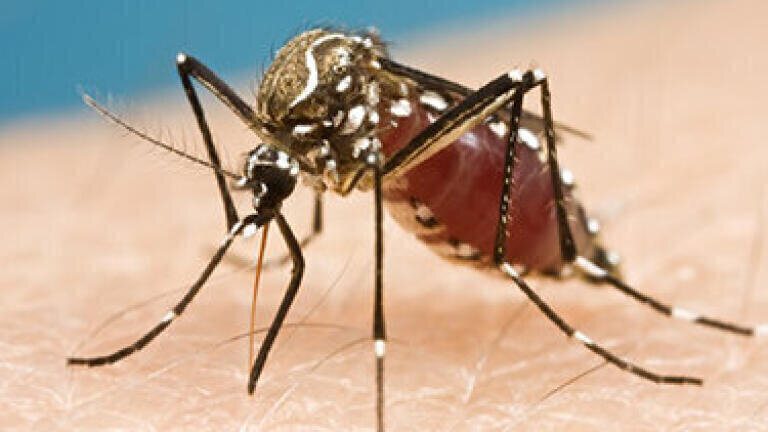
It’s the virus that’s shocked the planet, transmitted by mosquitoes and causing a myriad of side effects including fever, rash, severe headache, joint pain, and muscle or bone pain. Now, scientists are questioning whether or not the virus could be spread by other avenues, specifically kissing.
As Zika is found in saliva and other bodily fluids, a host of researchers affirm that the virus could be hopping to person to person via kissing. This theory has sparked significant disagreement among peers, particularly in the wake of Brazilian scientists releasing an official warning advising pregnant women not to kiss anyone showing possible symptoms. This is due to the fact that the virus has been linked to serious birth defects, including immune system disorders and brain defects.
The new theory comes from Rio de Janeiro’s Fiocruz research institute, with scientists revealing that they have identified live samples of Zika in both saliva and urine. This sparked new research into whether or not the two fluids could be a source of contamination.
Maria Teixeira, a Rio resident comments, “It’s starting to scare the hell out of me. At first everybody thought it was just a mild fever. Then, we were told it could develop into Guillain Barré syndrome, and then that it was associated with horrible side effects such as deformed babies. What’s next?”
While Fiocruz sees the discovery as a genuine cause for concern, others have accused the institute of taking things too far. Some argue that Zika is similar to dengue fever, another mosquito borne disease that can’t be spread via bodily fluids, but is present in saliva.
“The warning is crazy and unnecessary,” said Rubio Soares Campos, a co-identifier of the first case of Zika in Brazil. “Just because the virus is present in saliva does not mean it can be transmitted that way.”
Virus management is an integral part of modern medicine. For more insight into the arena, ‘Clinical Evaluation of a Multiplex Real-time PCR Assay for the Detection and Quantification of Hepatitis E Virus’ is a fascinating read. It delves into the clinical signs, symptoms and laboratory findings for the diagnosis of hepatitis E, and examines how these often overlap with other etiologies, which can make confirming a diagnosis problematic.
Image via Flickr Creative Commons. Photo credits: Day Donaldson
Lab Asia 33.4 - August 2026

 Product directory