Research news
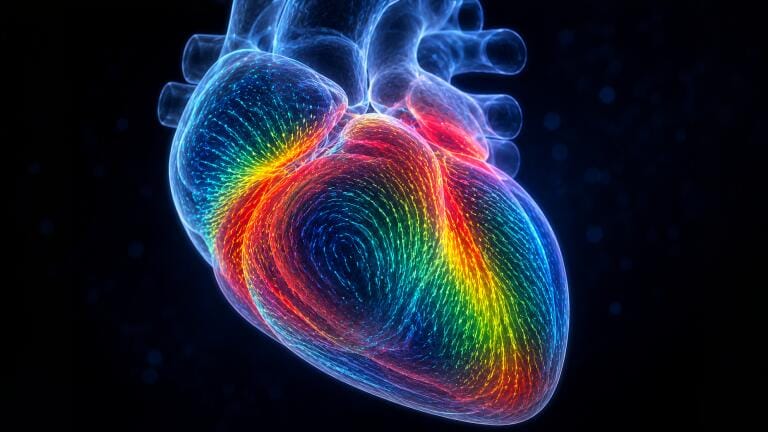
Researchers from University of Glasgow, University of Sheffield and Imperial College London have secured £4 million in funding from the Wellcome Trust to develop groundbreaking imaging technology capable of revealing the mechanical forces acting inside a living, beating heart in unprecedented detail.
The seven-year project aims to generate the world’s first comprehensive three-dimensional map showing how physical forces shape heart development and contribute to cardiovascular disease, creating an important new resource for researchers studying heart function and disease progression.
Building on an earlier 18-month feasibility study, the team will develop advanced imaging techniques to directly measure forces inside the hearts of live zebrafish, a widely used model organism in cardiovascular research. Scientists believe these mechanical forces play a critical role in shaping the heart during development, while disruptions may contribute to the earliest stages of heart disease.
To capture these forces, researchers have genetically engineered zebrafish so that key proteins responsible for holding heart cells together contain microscopic tension sensors made from elastic spider silk. As these sensors stretch in response to mechanical force, scientists can monitor tiny molecular changes with extraordinary precision.
The project will combine this novel biological engineering with highly sophisticated optical imaging capable of detecting individual photons of light with billionth-of-a-second accuracy, allowing researchers to measure force changes even while the heart is beating several times each second.
Jonathan Taylor, project lead at University of Glasgow, said:
“The heart is an extraordinarily complex biological machine, and we still don’t fully understand the forces that govern its development and growth. We know these forces play a vital role in shaping how the heart forms, and disruptions to them are thought to be among the earliest stages of heart disease. By developing new methods to visualise this force landscape, we hope to unlock new understanding of heart disease and how to treat it.”
Researchers say the imaging tools developed during the project will also be made available to the wider scientific community, opening new possibilities for cardiovascular and biomedical research worldwide.
More information online
ILM 51.6 Sept 2026



 Product directory


.jpg)
.jpg)














,-photo-Karin-Allander.jpg)



.jpg)
