News
Published over 9 years ago. See the latest and most current information on News.
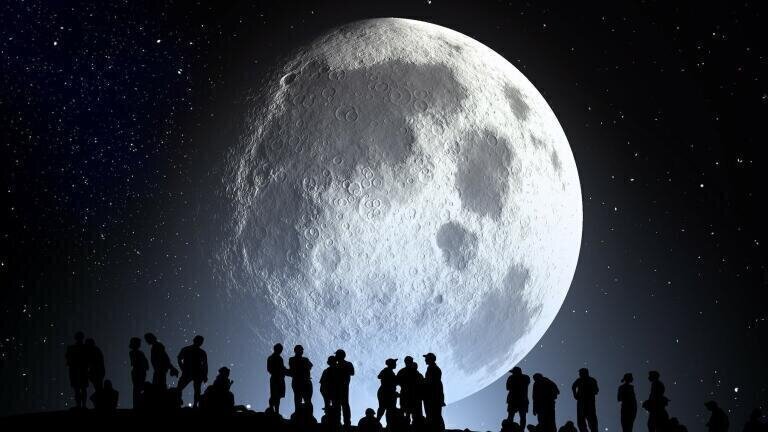
Mars may steal the spotlight when it comes to the search for water, but the moon has also received its fair share of interest from space scientists. While throughout the Apollo era researchers were convinced that its landscape was dry and dusty, new samples of lunar matter suggest that the moon could contain up to several hundred parts of water per million.
So where did the H2O come from? While nothing is certain, a new study published in Nature journal maintains that the moon’s water was delivered by asteroids around 4.5 to 4.3 billion years ago. How did they come to this conclusion? Both Earth and the moon were formed around 4.5 billion years ago. While Earth has been continually reshaped by plate tectonics, the moon has remained largely untouched. This offers scientists invaluable insight into the history of both the moon, and planet Earth.
To determine how H2O penetrated the moon’s interior the scientists used published lunar water samples to conduct a series of calculations. The team also analysed the water content and composition of meteorites and comets.
By comparing water source types with the composition of the moon’s H2O, they determined that water-rich carbonaceous asteroids likely deposited the majority of “volatile elements” on the moon. This includes water, nitrogen and carbon. They assert that the asteroids fell to the moon’s surface a few hundred million years after it formed. After crashing into its magma ocean they were soon trapped when the lava igneous rock solidified. Rather than simply boil off, water in the asteroids was retained thanks to a thermal lid that encased the surface.
For scientists, the theory could help to not only understand the moon’s composition, but also learn more about the origins of water on planet Earth. As both share similar geochemical characteristics, the scientists are suggesting that the Blue Planet may also have asteroids to thank for its vast supply of water.
While the Earth’s water sources were once pure, today they’re at constant risk of contamination. ‘Rapid Analysis of Glyphosate and its degradation Products in Surface Water Using UPLC-MS in Selected Ion Recording Mode’ explores the global issue, with a focus on glyphosate, one of the most widely used nonselective, broad-spectrum herbicides for vegetation controls. While it has a low toxicity count, the organophosphorus compound can be extremely harmful to aquatic life in surface water at higher concentrations.
ILM Guide 2026/27
 Product directory