Research news
Researchers at Oregon Health & Science University have identified a previously unrecognised role for the cancer-associated MYC protein in DNA repair, a discovery that may help explain why some tumours resist chemotherapy and radiation therapy
A protein widely recognised for its role in tumour growth has also been found to help cancer cells survive treatment by repairing damaged its DNA, according to a study from Oregon Health & Science University (OHSU), Portland, USA, that could influence future approaches to cancer therapy.
The research focused on MYC, a protein that is known to become overactive in most human cancers. Scientists have long understood that MYC acts within the cell nucleus to activate genes associated with growth, metabolism and proliferation. However, the latest findings have revealed an additional and previously underappreciated function linked directly to DNA repair.
Researchers have found that when DNA damage occurs, either through the stress associated with rapid tumour growth or through exposure to treatments such as chemotherapy, a modified form of MYC moves directly to the site of the damage and helps recruit cellular repair machinery. This process enables tumour cells to survive conditions that would otherwise should prove to be lethal.
The discovery may help explain why certain cancers prove resistant to chemotherapy and radiation therapy, both of which rely on extensive DNA damage to destroy malignancies. If tumour cells can repair that damage efficiently, treatment efficacy substantially declines.
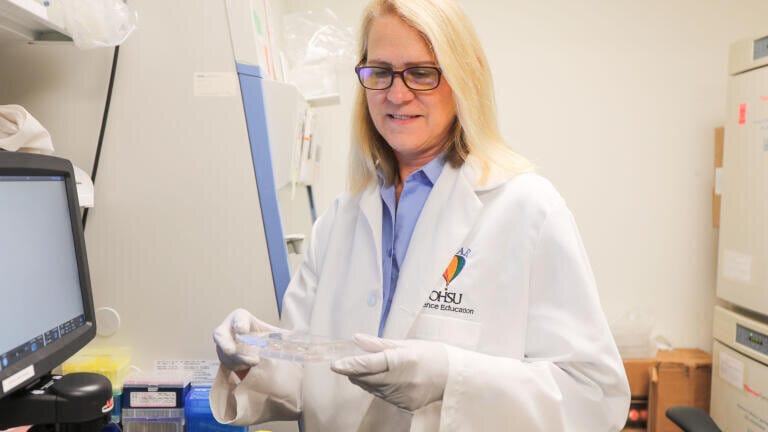
“Our work shows that MYC isn’t just helping cancer cells grow – it’s also helping them survive some of the very treatments designed to kill them,” said Dr. Rosalie Sears, senior author of the study, and ‘Krista L. Lake Chair’ in cancer research and co-director of the OHSU Brenden-Colson Center for Pancreatic Care.
The study’s first author, Gabriel Cohn, conducted the work as a doctoral candidate in Sears’ laboratory before taking up a postdoctoral position at University of Würzburg, Bavaria, Germany.
“These findings are particularly relevant for aggressive cancers like pancreatic cancer, where MYC activity is often very high,” Cohn said.
“Tumour cells in these cancers experience significant DNA damage and replication stress, yet they continue to survive and grow.
“Our work suggests that MYC helps these cells cope with that stress by actively promoting DNA repair,” she said.
The work identified what researchers described as a non-canonical function for MYC. Rather than regulate gene expression alone, the protein appeared physically at sites of DNA damage where it helped coordinate repair activity.
“This is a nontraditional – or non-canonical – role for MYC. Instead of controlling gene activity, it’s physically going to sites of DNA damage and helping bring in repair proteins,” Sears said.
DNA repair normally serves as an essential protective mechanism in healthy cells. In cancer, however, the same process can undermine therapy. Standard treatments including chemotherapy and radiation therapy depend upon catastrophic DNA damage to force tumour cell death. Enhanced repair capacity may therefore allow cancer cells to survive and continue to proliferate.
“Cancer therapies often depend on overwhelming tumour cells with DNA damage.
“If a cancer cell is very good at fixing that damage, it can survive treatment and keep growing,” she added.
The researchers reported that cells containing the activated form of MYC repaired DNA damage more efficiently and showed greater survival after exposure to DNA-damaging agents. The effect appeared especially pronounced in pancreatic cancer, one of the most lethal malignancies worldwide.
Using patient-derived pancreatic cancer cells and tumour datasets, the team found that cancers with elevated MYC activity also demonstrated increased evidence of DNA repair processes and correlated with poorer patient outcomes. The findings may therefore provide mechanistic insight into why some pancreatic tumours tolerate severe biological stress and resist conventional treatment.
“In pancreatic cancer, MYC appears to help tumours tolerate extreme stress,” Sears said.
“That stress comes from rapid growth, from poor blood supply, and from chemotherapy,” she added.
The study also reinforced ongoing efforts to target MYC therapeutically, despite decades of difficulty in developing safe inhibitors. MYC has frequently been described as ‘undruggable’ because its molecular structure does not easily permit drug binding and because MYC also performs important functions in healthy tissue.
Researchers now believe that this repair-related activity could offer a more selective therapeutic opportunity. Rather than block every MYC-associated pathway, scientists may eventually interfere specifically with its role in DNA repair to sensitise tumour cells to treatment.
“MYC is one of the two most important oncogenes in all of human cancer.
“If we can interfere with MYC’s role in DNA repair – without shutting down everything MYC does in healthy cells – we may be able to make cancer cells more vulnerable to treatment,” Sears said.
At OHSU, investigators have already begun to evaluate a first-in-class MYC inhibitor called OMO-103 in a window-of-opportunity clinical trial involving people with advanced pancreatic cancer. The short-term study has assessed tumour biopsies before and after treatment to determine how MYC inhibition alters tumour biology in patients.
The findings have added further evidence that MYC serves not only as a driver of tumour growth but also as a key factor in tumour survival under therapeutic stress. Researchers believe that future therapies designed to disrupt this DNA repair function could potentially improve outcomes for patients with treatment-resistant cancers.
For further reading please visit: 10.1101/gad.352832.125
ILM 51.6 Sept 2026



 Product directory

















,-photo-Karin-Allander.jpg)







.jpg)
