News
Published over 9 years ago. See the latest and most current information on News.
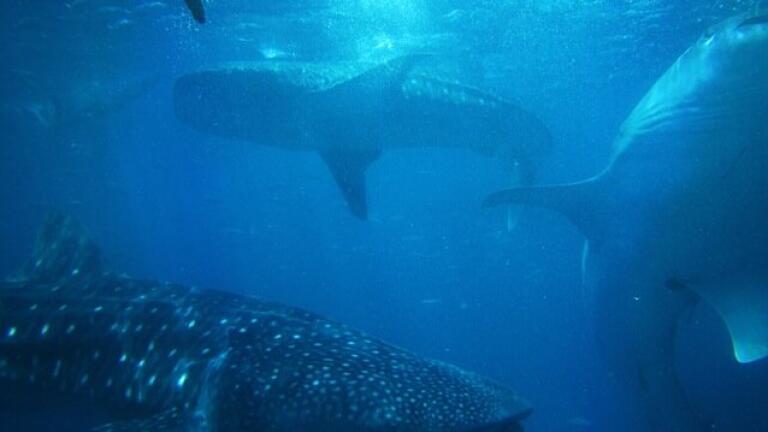
If you mention sharks and music, the majority of people will think of the same low, two-note piece of music. Let’s face it, they’ve got a pretty bad reputation, and the music doesn’t help. Sharks are always seen as dangerous and frightening, despite their lack of desire for humans. How much is the music to blame though? Researchers have studied the effect of a change in soundtrack when sharks are about, and the results are very interesting.
The research, taken out by the University of California, involved over 2,000 participants. They were shown one of three separate clips of sharks swimming, each with a different soundtrack. One of the 60-second clips had ‘ominous’ music. another had ‘uplifting’ music, and the third was silent. Another set of participants had only the audio – either ominous, uplifting or silence – for 60 seconds.
Following the video clip or audio, participants were asked to rate certain words on how accurately they described sharks. The words – scary, dangerous, vicious, peaceful, beautiful, and graceful – were rated from 1 (not at all) to 7 (very much). Using the same scale, participants were asked a question about willingness to support shark conservation:
“to what extent do you support measures to restore depleted shark populations (such as banning or regulating shark fishing, establishing no-fishing reserves, etc.), effectively increasing the number of sharks in the ocean?”
The results are clear – participants who listened to the ominous music rated sharks more highly for the negative words (scary, dangerous, vicious) than those with the uplifting music and silence. Similarly, the uplifting group rated them higher for the positive words (peaceful, beautiful, graceful) than those with ominous music or silence.
One issue was that it could be the music alone shaping people’s responses, rather than their perception of sharks as a result of the music. This was dealt with by the inclusion of the audio-only groups. Their responses had no significant correlation between positivity/negativity of music and positivity/negativity of responses.
Interestingly, despite the effect on participants’ perception of sharks, there was no significant effect on their willingness to support conservation. Conservation is important for science, whether it’s the conservation of different species by breeding, or by conserving their natural habitat. Scientists at the Federal University of Rio de Janeiro found big problems in the quality of water surrounding Rio. It’s just one of many examples of natural habitats being contaminated. Read about their concerns and potential solutions in ‘Advanced Rio Lab Warn of Olympic Water Quality Danger’
ILM Guide 2026/27

 Product directory