News
Published over 9 years ago. See the latest and most current information on News.
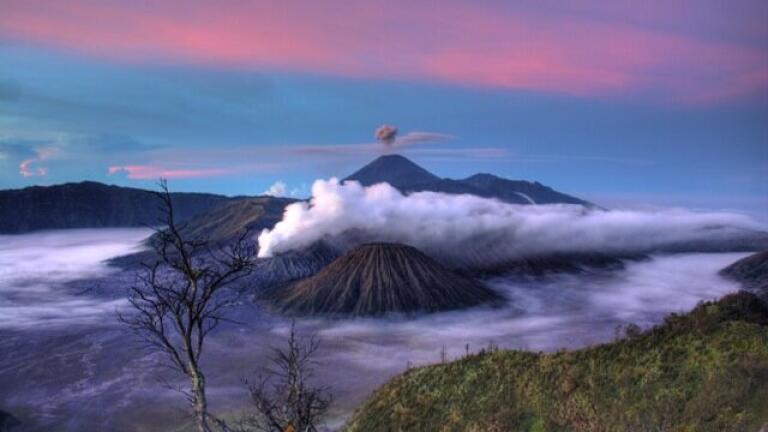
When a volcano erupts, death is much more than a possibility. Anyone nearby at the time of eruption will be killed. Thanks to scientific research, we know in advance when a volcano is going to erupt, so people can evacuate the area. So we all know that volcanoes are incredibly dangerous, but not all of us know why. There are actually several ways that a volcano can kill.
One of the most notable volcanic eruptions in history was Mount Vesuvius in 79 AD. Super-hot waves of gas flooded down the side of the volcano when it erupted. When they hit the nearby town of Herculaneum they were around 500 degrees Celcius. This instantly vaporised the inside and outside of the humans in its way, leaving only charred bones. The wave that hit neighbouring town Pompeii was slightly less scorching, so it left their bodies intact despite still killing them instantly.
Pyroclastic flows were also the main cause of death when the Nevado del Ruiz volcano erupted in 1985. However, this time, the flows were mixed with water, ash, mud and rock. The pyroclastic flow melted the mountain’s glaciers to create a thick, hot mixture known as a lahar, as surrounding earth was swept away. This caused the death of over 20,000 people who were buried by the trail of the deadly lahars.
An erupting volcano often blasts huge amounts of ash into the sky. When this falls, it can be disastrous. Mount Pinatubo did just that when it erupted in 1991. The falling ash was too much of a force for buildings to withstand. Buildings gave in, roofs collapsed and over 300 people were crushed.
The rarest potential cause of death from volcanoes comes from underwater volcanoes, when they release magma. It is stored underwater as carbon dioxide until a sudden motion, like an earthquake, causes it to rise rapidly to the surface. When this harmful gas is released into the environment it suffocates the humans around it.
Clearly, volcanoes are dangerous in more ways than one. One of the deadliest chemicals released by volcanoes is arsenic. It exists in both toxic and non-toxic forms, and is found in the earth’s water, air and soil. Most crops don’t absorb much arsenic from the ground. However, because rice is generally grown in water-flooded conditions, it can be more susceptible to higher arsenic levels. ‘Sample Preparation and Analysis of Arsenic in Rice’ explores the potential absorption of arsenic by rice crops.
ILM Guide 2026/27

 Product directory