News
Published over 10 years ago. See the latest and most current information on News.
Thought supervolcanoes were terrifying concepts invented by Hollywood filmmakers looking to thrill? Unfortunately, they’re all too real. In fact, the world is peppered with supervolcanoes lying everywhere from the USA and South America to Japan and New Zealand.
The name itself is ominous enough. But what exactly is a supervolcano?
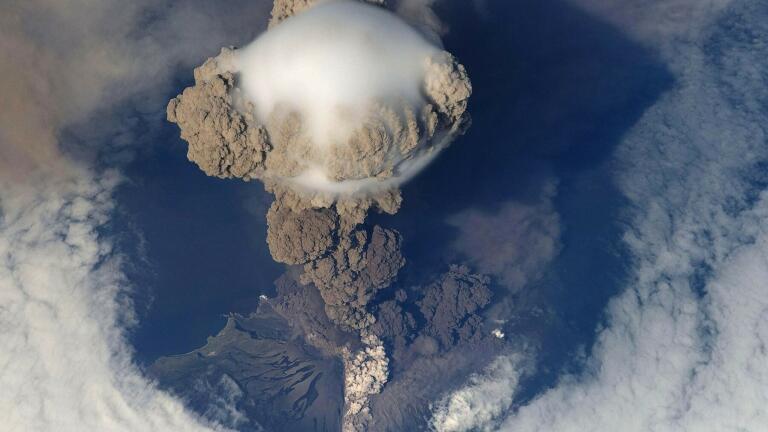
As far as science is concerned, the term ‘supervolcano’ refers to a volcanic rupture in the Earth’s surface, which has previously erupted on a scale of magnitude 8 on the Volcano Explosivity Index (VEI). This means that when deposits from the eruption were measured they spanned for more than 1,000 cubic kilometres (the equivalent of 240 cubic miles).
Created in 1982 by Chris Newhall of the United States Geological Survey and Stephen Self of the University of Hawaii, the VEI is a relative measurement scale that allows volcanologists to compare the breadth of eruptions. It takes a host of characteristics into account, including the volume of ejecta (this refers to debris such as ash, lava and pumice) and the height of the post-explosion column.
While evidence of VEI 8 eruptions has been recorded, all occurred tens of thousands, if not millions of years ago. In fact, the most recent known explosion took place in Taupo, New Zealand, more than 27,000 years ago. They’re clearly not an ever present threat, but that’s not to say that a supervolcano eruption isn’t a possibility…
To date, volcanologists have confirmed that planet Earth hosts a handful of supervolcanoes that have produced large scale pyroclastic eruptions in the past two million years. Recognised sites include the USA’s Yellowstone National Park, California’s Long Valley, Taupo in New Zealand and Toba in Indonesia. Japan, South America and Indonesia are also home to a myriad of enormous caldera depressions, which also fall into the ‘supervolcano’ category.
As for what would happen if one were to erupt… There’s a huge amount of speculation, with some scientists dismissing concerns while others are sensationalising the possibility. Yellowstone has landed itself in the spotlight this year, triggered by the discovery of a massive magma chamber.
Naturally occurring thermal activity can cause widespread devastation, however the concept is also highly useful when used in scientific applications. ‘What to Consider when Choosing a Thermal Cycler for Clinical Diagnostics’ explores the powerful and sensitive gene analysis technique of polymerase chain reaction (PCR), and its revolutionary impact on cancer research.
Lab Asia 33.4 - August 2026

 Product directory