News
Published over 7 years ago. See the latest and most current information on News.
Methods for producing concrete using industrial waste such as fly ash instead of concrete have been developed by scientists at Kaunas University of Technology, (KTU) Lithuania. The final product is said to be as strong as the traditional concrete, more resilient to damaging effects of acid and more stable in cases of expose to extreme heat and cold.
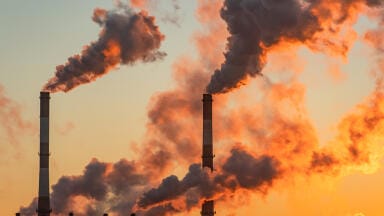
In order to produce 1 metric ton of Portland cement, a basic ingredient of concrete, up to 1 ton of carbon dioxide (CO2) is released. It is estimated that the global cement industry is responsible for 7% of yearly carbon dioxide emissions into the atmosphere and the researchers are aiming to reduce this negative concrete industry’s impact on the environment.
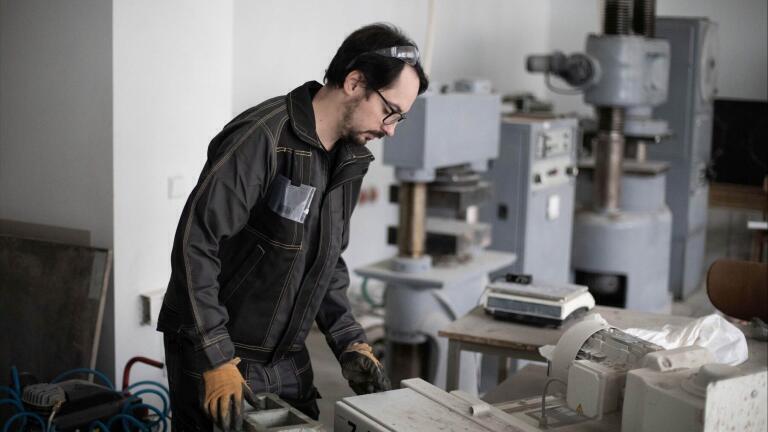
“At first, the idea that concrete can be produced without using cement seemed radical. Now, after several years of intensive work we succeeded to develop alkali activated concrete, with compressive strength of 55 MPa (the same as in usual concrete). Instead of Portland cement we are using alkali activated industrial waste products – fly ash, biofuel bottom ash, AlF3 production waste – silicagel etc,” said Vytautas Bocullo, researcher at KTU Faculty of Civil Engineering and Architecture.
“We are trying to use waste materials from local industry, such as aluminium fluoride production waste – silica gel and biofuel ash. The preparation of the substance depends on the material itself. For example, fly ash of coal can be used instantly, but biofuel ash needs to be ground up to the fineness of the cement. In order to improve the qualities of the final product, several substances can be mixed, but before that their chemical composition and additives need to be investigated for their impact on the environment and on the compressive strength of the concrete,” Bocullo added.
The research groups working in the KTU Faculty of Civil Engineering and Architecture are also experimenting and developing other types of concrete mixtures, such as ultra-high performance concrete, which is being used for safe production, self-renewing concrete and others.
ILM 51.6 Sept 2026



 Product directory


.jpg)
.jpg)