News
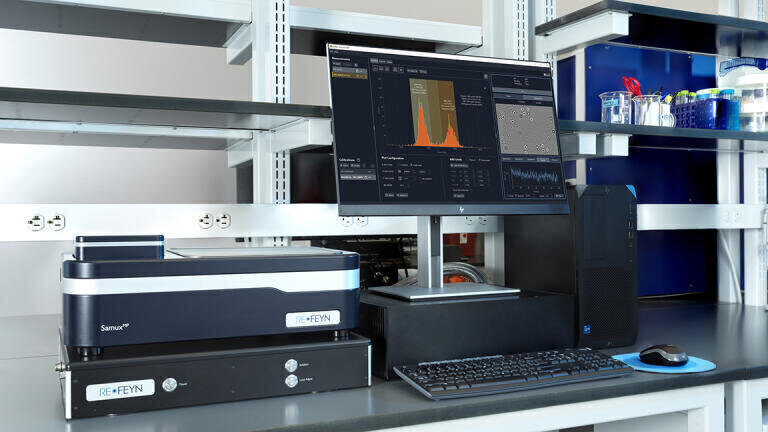
Mass photometry, a single-particle light-scattering technique commercialised and advanced by Refeyn, has been acknowledged by the US Pharmacopeia (USP) as a key orthogonal method for characterising adeno-associated virus (AAV) reference standards used in gene therapy. This recognition is reflected in the draft of USP general chapter <1067>, which provides guidelines for the manufacture and quality control of recombinant AAV products.
Accurate measurement of the ratio of empty to full AAV capsids is critical for ensuring the safety and efficacy of gene therapies. The new USP standards, developed through multi-laboratory collaboration, recommend multiple orthogonal techniques to assess this quality attribute. Mass photometry was included alongside established methods such as size exclusion chromatography with multi-angle light scattering (SEC-MALS), analytical ultracentrifugation (AUC), UV-visible spectroscopy, and charge detection mass spectrometry (CD-MS).
The USP highlights mass photometry’s capability to distinguish empty, full, and partially filled capsids with minimal sample requirements, supporting its use as a reliable analytical tool in gene therapy development. This follows similar recognition by the British Pharmacopeia in 2024, which described mass photometry as a viable option for at-line process monitoring of AAV products.
These developments reflect the growing acceptance of advanced analytical techniques for detailed characterisation of viral vectors, contributing to improved standardisation and quality assurance in gene therapy research and manufacturing.
More information online
ILM 51.6 Sept 2026



 Product directory






















.jpg)


.jpg)
