News
Published over 10 years ago. See the latest and most current information on News.
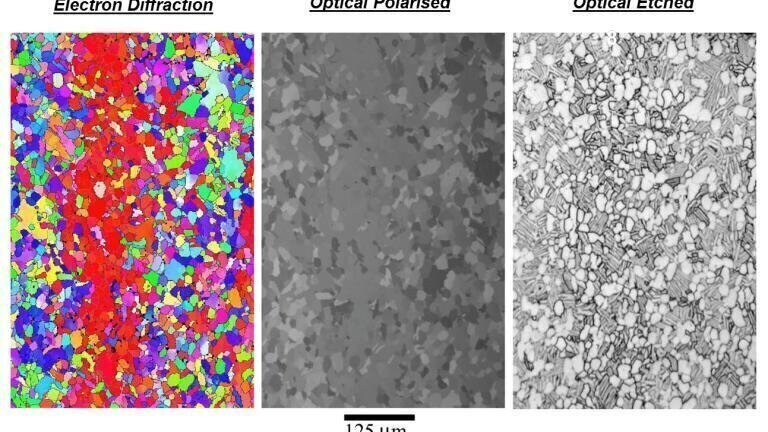
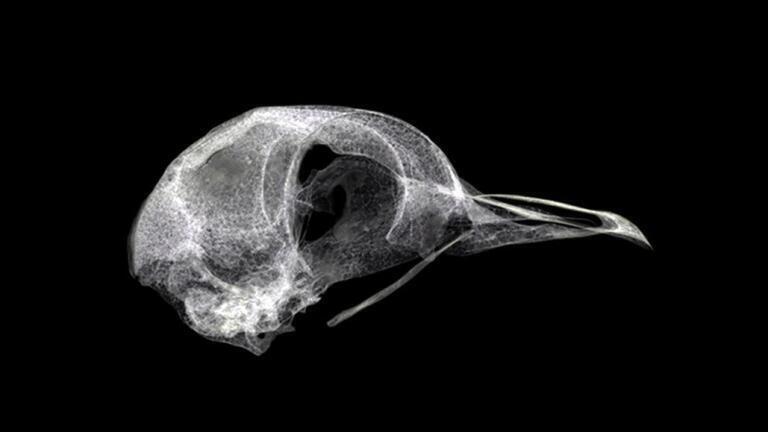
A £2.5 million Engineering and Physical Sciences Research Council (EPSRC) award will bring new imaging technology to Swansea University’s College of Engineering to enable experts to examine materials right down almost to the atomic level. Materials scientists Dr Richard Johnston and Dr Cameron Pleydell-Pearce will use the funds for a micro-level CT scanner and transmission electron microscope for use on a range of potential applications, including improved detection of metal fatigue in aircraft materials, or imaging of complex architectures in the natural world.
The Swansea team have already used their existing scanning and imaging equipment to reveal the contents of ancient Egyptian mummified animals and the composition of space debris; the addition of the new equipment means researchers can now use a combination of different techniques and instruments to build a fuller picture of how materials behave.
Dr Richard Johnston, senior lecturer in materials at Swansea University’s College of Engineering, said: "We’re extremely happy to receive this highly competitive EPSRC funding. The new X-ray and electron microscopes will enable us to image complex micro and nano structures of advanced materials with exceptionally high resolution, and in 3 and 4 dimensions. This will advance our imaging research portfolio in many exciting areas, including biomaterials, aerospace, metallurgy, medicine, manufacturing, climate science, and archaeology, among many others. The new facility will be the only one in Wales to offer an integrated imaging service, and will be open to industry and academic partners across the region."
Dr Cameron Pleydell-Pearce, TATA steel lecturer in materials at Swansea University, underlined that local links and partnerships are at the heart of this work: “The proposal involved 14 industrial partners, 4 academic institutions and four separate public funded bodies. This is a fantastic example of the momentum that can be generated within the Welsh and UK academic / industrial community if academia and industry pull together. The significant critical mass that we have in the region will help us to build on this network to tackle a wide range of academic and industrial challenges – there are many opportunities!”
The current EPSRC award follows other funding from the Welsh Government SER Cymru programme, the Welsh European Funding Office and Swansea University. The new equipment will be based in the Engineering Manufacturing Centre (EMC), which, along with the Innovation Hub, have been part funded by the European Regional Development Fund through the Welsh Government. The EMC is on the University’s new science and innovation Bay campus, which opened in September 2015.
Lab Asia 33.4 - August 2026
 Product directory