News
Published over 15 years ago. See the latest and most current information on News.
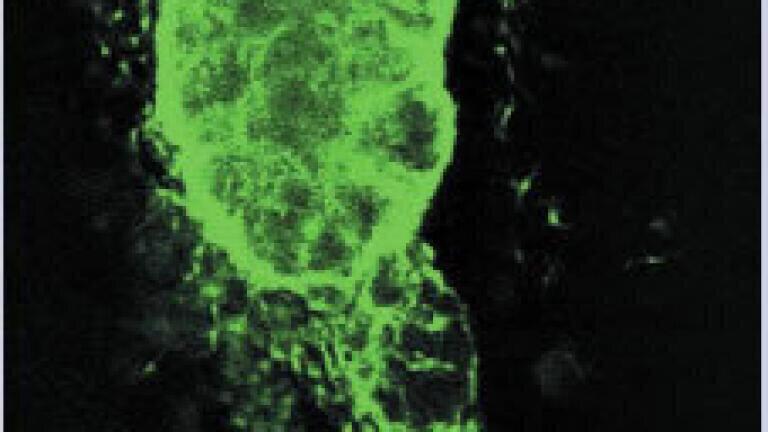
Research led by a scientist at the University of York and Hull York Medical School (HYMS) has thrown new light on the way organs migrate during development in the body.
An international team headed by Dr Mark Coles, of the Centre for Immunology and Infection -- a joint research centre created by the University’s Department of Biology and HYMS -- used video microscopy to investigate how cells migrate collectively in groups.
The research* which investigated the science behind the movement of the thymus gland during organogenesis, involved scientists at the Medical Research Council’s (MRC) National Institute of Medical Research in London, Cancer Research UK and the School of Biological Sciences at the University of Edinburgh, as well as researchers in the USA, Germany, Portugal
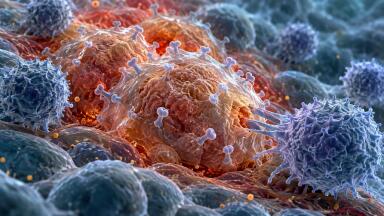
They discovered that migration of the thymus, which is a key component of the immune system, involved co-ordinated interactions of multiple cell types, through signals between EphB and ephrin-B2 receptors.
Dr Coles said: “Exactly how groups of cells move around the body is still unknown. But, by studying some of the processes involved in organ migration, we have provided useful information to help us to understand, for instance, how tumours spread and wounds heal.”
*The research is published in Proceedings of the National Academy of Sciences.
ILM 51.6 Sept 2026




 Product directory