Sample preparation
To ensure consistent cement quality, clinker must undergo strict quality control. Reliable sample preparation and analysis are essential, as clinker properties directly influence grinding efficiency and the performance of the final cement. Laboratory processes therefore rely on jaw crushers for pre-crushing and mills for fine-grinding.
The production and processing of clinker are among the most energy-intensive steps in cement manufacturing. The highest energy demand arises during the heating of raw meal in the kiln, while additional electrical energy is required for clinker grinding and material handling. Around 50% of total CO₂ emissions result from the chemical calcination reaction during clinker formation, with the remaining emissions caused by fuel combustion and electricity consumption.
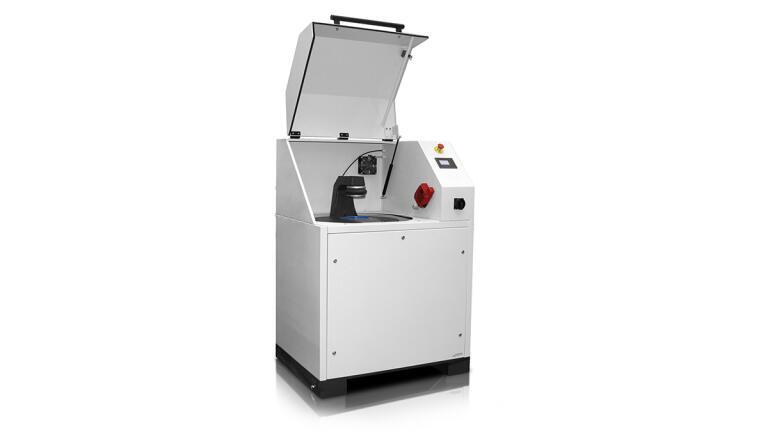
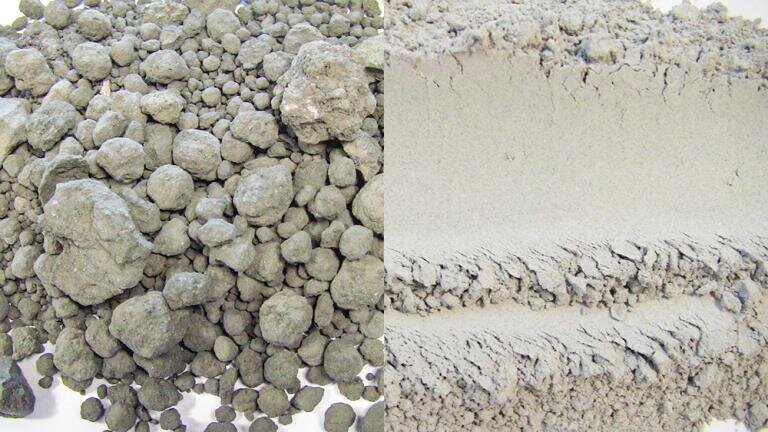
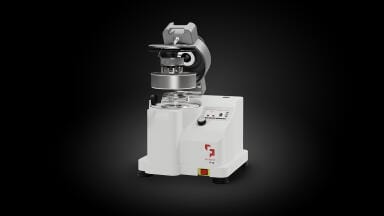
Pre-crushing in the jaw crusher to 5 mm, fine-grinding in the vibratory disc mill RS 300 to 200 µm. The total process time for 1 kg was 4 minutes.
From the rotor mill range, the cross beater mill SK 300 is appropriate for the subsequent fine grinding step, as it is specifically designed for harder, abrasive materials. Equipped with interchangeable tungsten carbide baffle plates and toothed grinding chamber inserts, it is particularly suitable for crushing cement clinker. In this process, 1 kg of pre-crushed sample (5 mm) can be reduced to approximately 200 µm in just 1 minute. For applications requiring finer final fineness, ball mills such as the PM 400 are used, achieving 80 µm in 15 minutes.
Combining speed with high fineness, a disc mill provides an optimal solution for crushing clinker samples. Therefore, a setup consisting of a jaw crusher followed by a vibratory disc mill RS 200 or RS 300 is commonly used for cement grinding. The RS 300 can grind a 1 kg sample to below 100 µm in about 4 minutes. The RS 200 is intended for smaller sample quantities of up to 250 ml and is generally even faster than the RS 300.
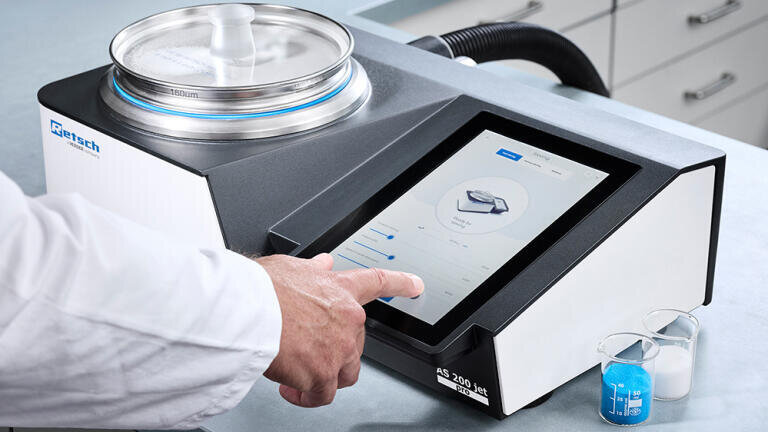
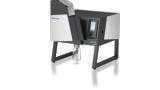
Modern air jet sieving technology provides clear advantages in the analysing process. The AS 200 jet pro combines sieving, weighing, and evaluation in one system, eliminating redundant sample transfer and reducing handling steps.
A key benefit is the evaluation directly within the device. The system uses software-based evaluation and performs automatic calculation of results according to standard procedures. As the first air jet sieving machine with onboard weighing, sieving and analysing, it enables direct determination of particle size data in a single bench-top unit.
This results in significant time savings, as multiple steps are performed in one continuous process, improves reproducibility and ensures consistent, reliable results.
ILM 51.6 Sept 2026



 Product directory


.jpg)
.jpg)


















.jpg)
