Chromatography
Published over 8 years ago. See the latest and most current information on Chromatography.
From Facebook selfies to Instagram stories, snapping photographs has become a daily habit for most smartphone owners. While it seems relatively harmless, new research suggests that taking a photograph of something impairs the brain's ability to recall the moment.
The study builds on previous research published by psychologist Linda Henkel, who found that people lose the ability to recall the specific details of objects after taking a photograph. She labelled it the photo-taking impairment effect and hypothesised that the brain treats the camera as an external memory device and therefore jeopardises its ability to retain information.
The new study was published in the Journal of Applied Research in Memory and Cognition and explores a concept known as the “offloading hypothesis”. It muses that if the photograph is not kept the memory impairment effect is lessened. They tested the theory using Snapchat, a multimedia social messaging app that automatically deletes photos after they've been viewed. After showing images to 50 undergraduate students they found that most experienced memory impairment, despite the fact they were aware their photographs would soon be deleted. Further experiments carried out on a normal camera presented similar results.
“These results suggest that explicit offloading cannot fully account for the photo-taking-impairment effect,” conclude the team in the General Audience Summary. Instead, they suggest that the simple act of taking a photograph interferes with the way the brain engages with and encodes objects and scenarios. They call this a “metacognitive illusion” and theorise that the process of snapping a photo erroneously convinces the brain that it's already recorded the image.
The offloading hypothesis shares many similarities with the transactive memory theory, a psychological premise put forward by Daniel Wegner in 1985. It asserts that couples employ a strategic shared memory system to split the burden of recollection. Additional research indicates that the transactive memory theory can also be applied to relationships with prosthetic objects such as notepads, computers and smart phones. Basically, if the brain knows information is being recorded elsewhere it slacks off and doesn't apply the same memory retention efforts as it would normally.
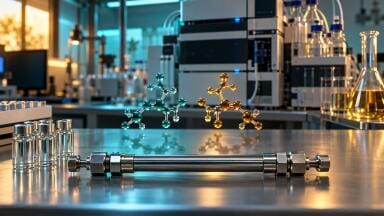
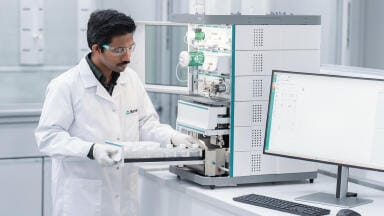
From psychology to pharmaceuticals, contemporary studies rely heavily on next-generation laboratory equipment. For a closer look at the latest high-performance liquid chromatography (HPLC) technologies don't miss 'Biphenylpropyl Modified Silica: An Interesting Choice for RP Chromatography'
ILM 51.6 Sept 2026


 Product directory


.jpg)
.jpg)