Chromatography
Published over 15 years ago. See the latest and most current information on Chromatography.
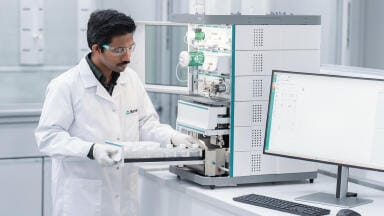
Dionex is pleased to announce the release of an application that demonstrates the determination of ethylene glycol (EG) and diethylene glycol (DEG) in a sorbitol solution using liquid chromatography with
pulsed amperometric detection.
Application Note 246: Determination of Ethylene Glycol and Diethylene Glycol in a Sorbitol Solution describes two confirmatory methods to determine 0.1% EG and DEG in sorbitol solutions. Glycerin, sorbitol, and propylene glycol (PG) are widely used in pharmaceuticals and personal care products. The adulteration of these pharmaceutical formulations with the less expensive and toxic DEG and EG has been linked to systemic alcohol intoxication, multiorgan failure, and acidosis, leading to hundreds of fatalities. The US FDA proposed a limit of 0.1% DEG and EG contamination in sorbitol and other excipient solutions. The methods described in AN 246 demonstrate the accurate, precise, and direct determination of 0.1% DEG and EG in a sorbitol solution.
ILM 51.6 Sept 2026

 Product directory