Clinical, medical and diagnostics
Researchers at China Three Gorges University have reported a zirconium-coordinated nanomaterial that improves the water solubility and stability of the near-infrared dye IR825, delivering a photothermal conversion efficiency of 35.7% and sustained performance across repeated heating cycles in laboratory tests
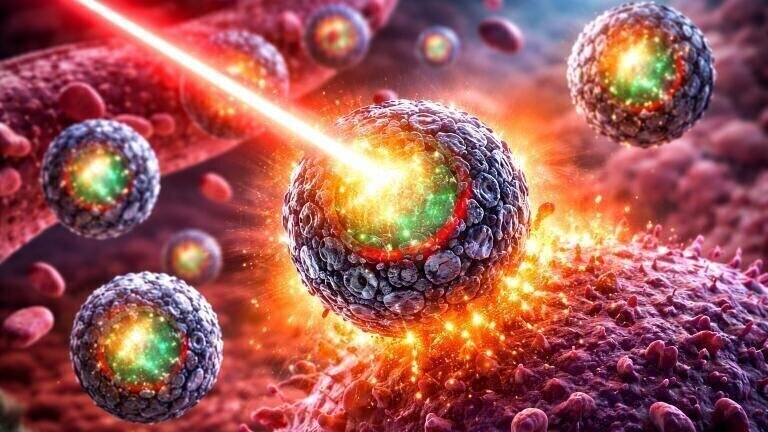
Photothermal therapy has continued to attract interest as a minimally invasive approach to cancer treatment that uses light to generate localised heat inside tumours. The technique aims to destroy malignant tissue while limiting damage to healthy cells, potentially reducing some of the systemic side effects that clinicians often see with chemotherapy and radiotherapy.
In a recent study from China Three Gorges University, Yichang, China, researchers have described a nanomaterial designed to tackle a persistent practical problem in photothermal therapy which is that many promising near-infrared dyes break down too quickly in biological conditions or fail to dissolve well enough in water to reach tumours efficiently.
The team reported the development of a nanometre-scale zirconium–IR825 coordination assembly, formed when zirconium ions coordinate with chemical groups on the cyanine dye IR825. According to the researchers, this strategy improved the dye’s solubility and stability, which in turn supported greater accumulation at tumour sites in experimental models.
Photothermal therapy (PTT) typically relies on a photothermal agent that absorbs near-infrared (NIR) light, then converts that energy into heat. Cyanine dyes have drawn attention because they can absorb strongly in the near-infrared region and often show favourable biocompatibility profiles. However, many of these molecules have suffered from poor water solubility and rapid clearance from the body, factors that can limit the amount of material that reaches a tumour and reduce treatment durability.
The research team has reported that its Zr–IR825 nanoparticles has an average diameter of about 200 nanometres and shows strong near-infrared absorption. In photothermal testing, the material achieved a photothermal conversion efficiency of 35.7%, which indicates the fraction of incoming light energy converted into heat. The photothermal response increased with both nanoparticle concentration and laser intensity, consistent with expectations for heat generation driven by light absorption.
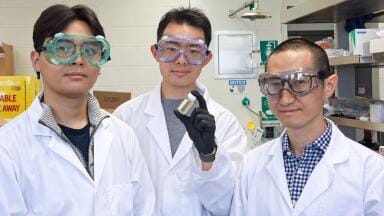
“By nano-engineering the organic molecule IR825, we have addressed critical issues such as photobleaching and poor water solubility, while retaining its high photothermal efficiency,” said Dr. Peng Geng, who led the work.
“This significantly enhances the material’s practicality and stability,” he added.
The researchers reported that the nanomaterial retained performance across multiple heating cycles, a feature that could matter clinically if repeated sessions of irradiation would be required. They also selected zirconium because of its perceived low toxicity and good compatibility with biological systems, which will strengthen its case for safe use.
In cell-based experiments, the team said Zr–IR825 nanoparticles were effective in killing tumour cells under laser irradiation while showing relatively low toxicity in normal cells in the absence of light exposure. The researchers also reported favourable blood compatibility, a requisite for any nanomaterial which would be administered intravenously.
“The successful development of Zr–IR825 nanoparticles offers a new approach for the development of efficient and safe cyanine-based photothermal agents, with the potential to advance the clinical translation and application of precise photothermal therapy,” Dr Peng said.
While the findings have suggested that zirconium coordination can improve the stability and usability of IR825 as a photothermal agent, the work remains at an early stage. Further studies will be needed to test how consistently the material targets tumours in living systems, how long it persists in circulation and how well the body clears it, alongside safety considerations.
For further reading please visit: 10.55092/bm20260001
ILM 51.6 Sept 2026




 Product directory