Company news
Köttermann has delivered a comprehensive laboratory redesign for Repha to improve quality assurance capacity and integrate sustainable building systems with modern laboratory workflows
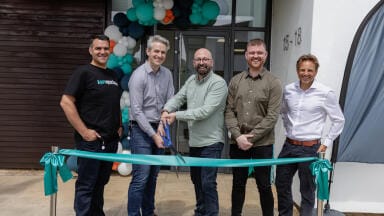
Biological pharmaceutical company Repha has now completed a laboratory redesign project with its laboratory equipment supplied by Köttermann. The project has addressed rising operational pressures at the company by combining sustainable building technology, structured laboratory planning and ergonomic workplace design.
Repha had reached the limits of its existing operational capacity after both a growth in demand, and increasingly rigorous quality standards, had placed additional pressure on its laboratory infrastructure. And since the COVID-19 pandemic, demand for naturally-derived active ingredients which are intended to support the immune system has risen significantly. This has created a need for additional space while also adding to the demands placed on quality assurance.
The project was conceived not simply as an expansion of available laboratory space, but as a comprehensive redesign of the company’s laboratory environment. Repha required supplementary workplaces to mete safety standards, while also supporting ergonomic work, transparent spatial organisation but also wider sustainability objectives of the building. The company therefore pursued an approach that brought together efficiency, technological performance and employee welfare.
Modern laboratory sustainability now extends beyond simply resource conservation. It also includes the creation of spaces that support health, well-being and effective working. This principle shaped the redesign at Repha, where HLL Landgraf Laborsysteme worked in close coordination with Köttermann, architects and laboratory planners to develop facilities that reflected both technical requirements and the needs of future users.
A central aim of the project was to create contemporary, clearly-organised laboratory spaces that would guarantee safe work while also being functional, visually open and aesthetically coherent. The wider building concept placed particular emphasis on sustainable construction, while the laboratory design sought to provide transparent structures that separated different activities without isolating staff from each other.
Wide consultation among stakeholders with the inclusion of multiple perspectives became an important feature of the planning process. This included laboratory personnel, Repha’s laboratory manager, HLL Landgraf Laborsysteme, Köttermann and architects from bss architektur being involved from the earliest conceptual phase. This collaborative approach allowed the future users of the laboratories to contribute their practical knowledge, preferences and workflow requirements before the design was finalised.
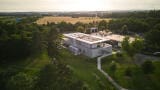
The resulting laboratories were developed in detail to match Repha’s operational needs. The facilities have been engineered for energy efficiency and to make use of heat pumps and solar energy which means the company no longer uses fossil-fuel heating systems. The removal of hot water storage tanks has further reduced energy consumption and contributed to the building’s wider sustainability concept.
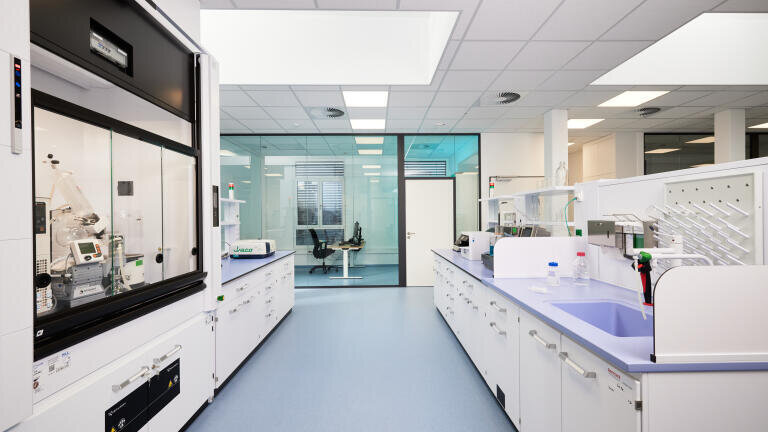
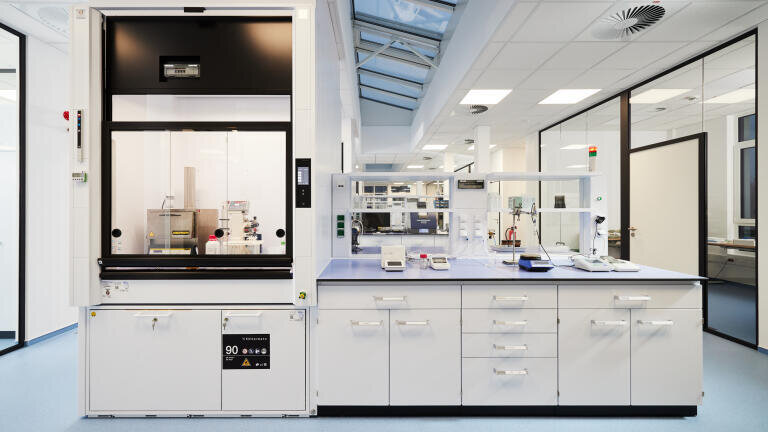
An air-handling concept has integrated Köttermann fume cupboards into the ventilation and temperature control system. This means the fume cupboards perform a dual function. They protect staff during critical work steps and also contribute to laboratory air quality through controlled air exchange. This approach supports a stable room climate while strengthening occupational safety within the laboratory environment.
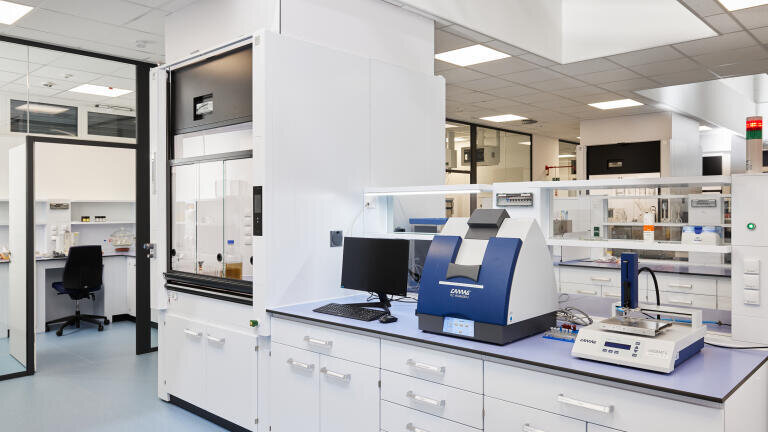
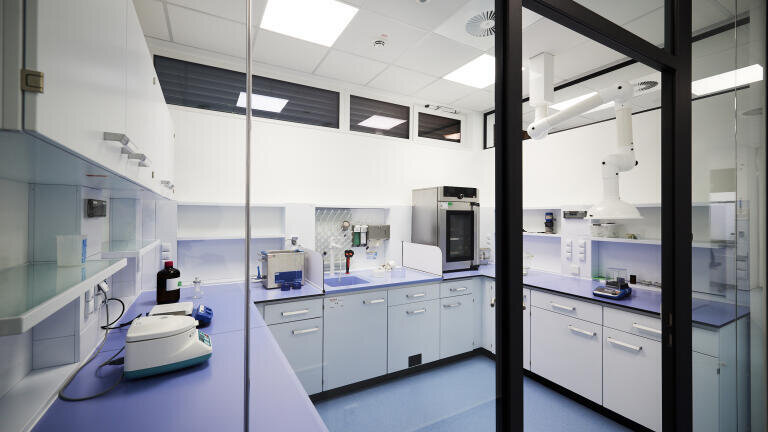
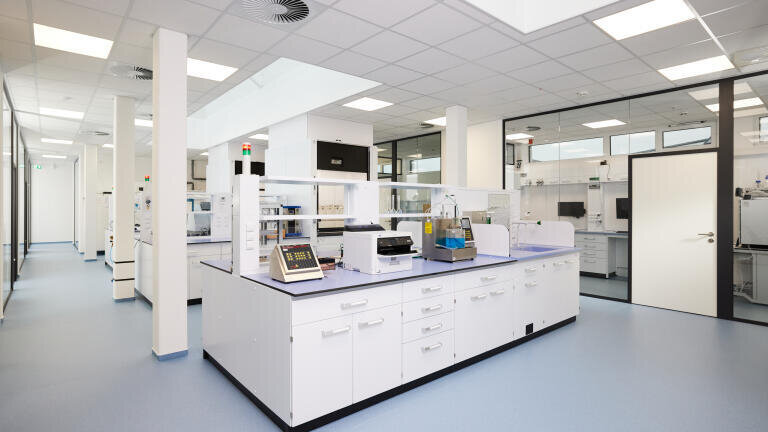
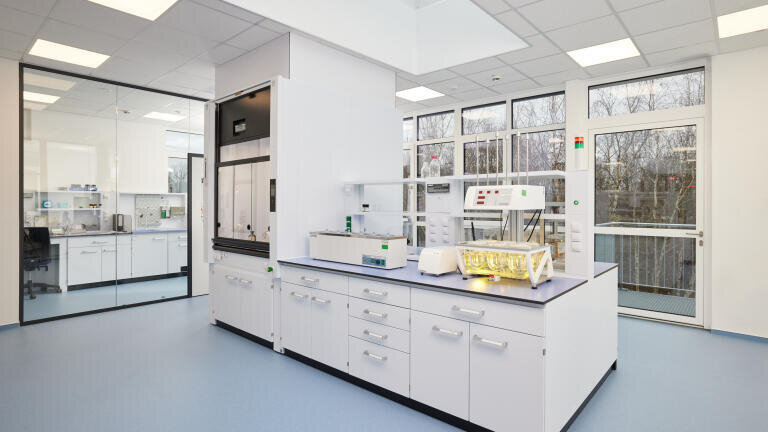
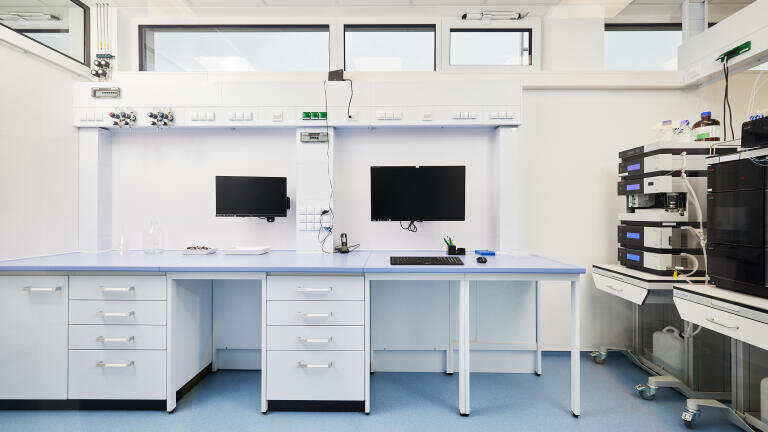
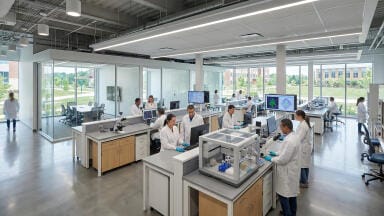
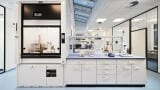
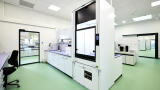
The redesign has also introduced a clearer division of laboratory functions. Distinct activity areas have been separated while remaining visually connected by the use of internal glass partitions. The current layout includes a high-performance liquid chromatography laboratory, an enzyme laboratory and a weighing room, each organised as a dedicated area to support safety and structured work.
Glass walls have allowed Repha to address the need to balance spatial separation with the advantages of visual contact. This helps staff to work with fewer distractions in areas where concentration is essential while also preserving a sense of openness and shared purpose across the laboratory. Work processes that could otherwise disturb other activities are now separated from the main laboratory environment.
Ergonomic workstations and a defined spatial structure have been used to improve workflow and support staff well-being. Köttermann’s Arctic White range of steel furniture, combined with ceramic and high-pressure laminate laboratory worktops in Baltic Blue has deployed a coherent and understated design. The choice of colour scheme and materials were made to emphasise a sense of space, light and order within the laboratories.
The design project has demonstrated how laboratory planning can integrate technical performance, workplace quality and sustainable construction in a single process. For Repha, the redesigned facilities represent more than just additional capacity. They provide a laboratory environment that supports scientific work, with safe and efficient operations, welfare of staff at their core and reduced environmental impact.
The completed laboratories show how a holistic planning strategy can turn long-term operational requirements into a practical working environment. By combining advanced laboratory technology, sustainable building systems and collaborative design, Köttermann and HLL Landgraf Laborsysteme together have delivered spaces intended to support Repha’s continued growth while placing people and environmental responsibility at the heart of the project.
ILM 51.6 Sept 2026



 Product directory














.jpg)
